Seattle
Search Engine Marketing for Seattle Shopify Brands
Paid search and SEO working as one plan, built around profit, and designed for stores that compete in Amazon’s home city.
In Amazon’s Hometown, Search Results Are Crowded .
Seattle is where Amazon began, and it shows how online shopping works here. Shoppers are comfortable searching, comparing and ordering in minutes. Big marketplaces dominate many product searches. And local tech culture means customers often expect a fast, polished, no-nonsense online experience.
If you sell on Shopify, that raises a real question: how does an independent store get found when the biggest retailer in the world ranks for the same terms?
The answer is a thoughtful search engine marketing plan. RankMyShopify is a Shopify-only search engine marketing company. We combine paid search and organic search into one strategy, and we measure it by profit, not clicks. This page explains how it works and what we’d do differently for a store like yours.
What Search Engine Marketing Means, in Plain Terms
Search engine marketing, or SEM, is the umbrella term for everything you do to get your store in front of people searching on Google, Microsoft Bing and other search platforms. It has two parts:
PPC (pay-per-click) advertising
where you pay for placement in ads on search results and Shopping listings. It’s fast and controllable, but stops when the budget does.
SEO (search engine optimization)
where you improve your store so it earns unpaid placement. It takes longer, but builds lasting value.
Most agencies sell one or the other. Our approach treats them as a single system. Paid campaigns show you quickly which keywords, products and messages convert, and that data tells us which pages to build for organic search. Organic rankings in turn lower your reliance on paid clicks, and protect you when ad costs rise.
How We Split Budget Between Paid and Organic

There’s no universal ratio. It depends on your stage.
A new or small store. Paid search usually comes first because it delivers traffic and data quickly. We keep campaigns tight, focused on your best products and brand terms, and begin SEO foundations in parallel so that organic starts compounding.
A growing store. Here, both channels carry weight. Paid search captures high-intent demand today, while SEO builds collection and content pages that bring in new buyers at lower cost over time. We shift budget between the two as the data comes in.
An established store. SEO and brand search often carry a large share of revenue, and paid search is used to defend key terms, test new products and scale seasonal peaks. We watch closely for paid clicks that would have come in organically anyway.
We review this balance regularly, because the right mix changes as your store grows.
PPC and SEM in Seattle: Our Paid Search Approach
Our Google Ads for Shopify work is built around one principle: spend should follow profit, not revenue.
How We Structure an Account
A typical Shopify account might include:
- Brand search. Protects your own name from competitors bidding on it, and is monitored so you don’t overpay for customers who’d come anyway.
- Non-brand search by category. Campaigns for the high-intent terms that match your collections, such as product types, materials and uses.
- Shopping campaigns for hero products. Your best-margin, best-selling items get their own budget and bidding.
- Performance Max for the wider catalog. Structured so winners get funded and weak items don’t drain budget.
- Remarketing. Brings back visitors who looked but didn’t buy.
- A Microsoft Advertising mirror. Covered in the next section.


Profit-Based Bidding
Return on ad spend (ROAS) can mislead. A product with a 4x ROAS and thin margins can lose money, while a 2.5x ROAS on a high-margin item can be very profitable. We group products by margin and return rate, set targets for each group, and report on contribution margin so you can see what’s really left after costs.
Clean Product Feeds
Shopping ads live or die on the product feed. We fix titles, attributes, categories, GTINs, images and shipping data in Google Merchant Center, because a better feed improves both visibility and cost per click.

Search Term Discipline
We review search terms weekly, add negative keywords to cut waste, and use the real queries that convert to guide both ad copy and SEO pages.
Microsoft Advertising: The Seattle Channel Many Brands Skip
Microsoft is headquartered nearby, and its advertising platform covers Bing, Edge, and a network of partners. Many Shopify stores ignore it, which can be a mistake.
Different audience mix
Microsoft’s search audience can differ from Google’s, with a larger share of desktop users in some categories, which can suit higher-priced and considered purchases.
Often less competition
Fewer advertisers bid on Microsoft than on Google, which can mean lower costs per click for some terms. Volume is smaller, so it’s a supplement, not a replacement.
Easy to set up
Campaigns can usually be imported from Google Ads, and Shopping campaigns can use your existing Merchant Center feed.
AI search tie-in
Microsoft’s search products increasingly blend AI answers with results, so presence there is becoming more relevant.
We test it with a modest budget and keep it if the numbers work.

Competing With Amazon in Search
You don’t have to beat Amazon for every search. You have to choose your fights.
- Avoid head-on battles for commodity terms. If a search is just a product type with many near-identical results, Amazon will often win. We find the terms where you have an edge.
- Target specifics. Longer, more specific searches, such as particular materials, uses, sizes, styles or problems, usually favor specialists.
- Own your brand. Make sure your store, not a reseller or marketplace listing, wins searches for your name.
- Lean on what Amazon can’t offer. Better information, a real story, expert guidance, bundles, subscriptions and customer service all matter, and they’re also good SEO content.
- Make the marketplace decision deliberately. For some brands, selling on Amazon helps with discovery. For others, it takes margin and the customer relationship. We help you weigh it and keep your Shopify store as the place where loyal customers return.
The SEO Side of Search Engine Marketing
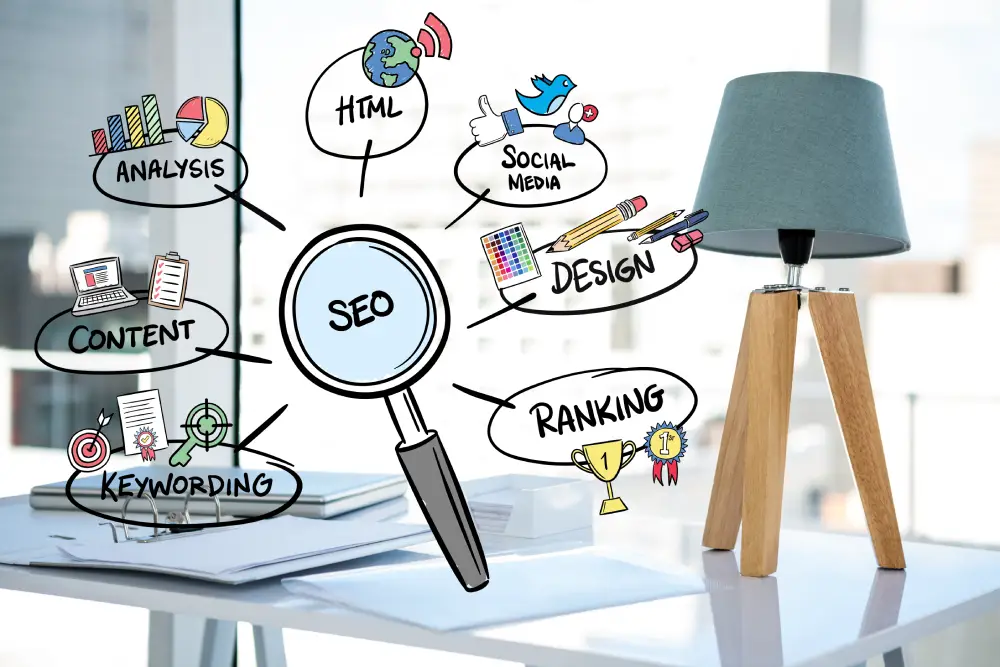
Organic search builds on the same keyword and conversion data we gather from paid campaigns. Our Shopify SEO work covers collection and product page optimization, technical foundations, structured data, content and links, all sequenced so it supports paid performance, not just rankings.
For example, a keyword that converts well in paid search and has little organic competition becomes a priority for a dedicated page. And a collection that already ranks well may need less paid support.
Landing Pages and Conversion for Paid Traffic
Paid clicks are expensive, so what happens after the click matters. We work on message match (the ad and the page should say the same thing), page speed, mobile layout, clear product information and checkout friction, using the same evidence-first process as our conversion rate optimization service. Small gains in conversion rate lower your cost per sale across every campaign.
Pacific Northwest Demand Patterns
Search demand here follows local rhythms. We plan campaigns and content around them:
- Wet-weather seasons. Fall and winter lift searches for rainwear, footwear, layers and home comfort.
- Outdoor seasons. Spring and summer bring hiking, camping, cycling and water-sports demand, and winter brings snow sports.
- Cozy and coffee culture. Home, drinkware, gifts and seasonal products.
- Tech and gear. Accessories, work-from-home items and gadgets.
- Sustainability interest. Shoppers often look for materials and sourcing information, so those details help both ads and SEO.
- Gifting peaks. The usual US holiday moments, with early planning for Black Friday and Cyber Monday.
Most of our Shopify clients sell nationally, so we weigh these patterns against your actual customers rather than assuming everyone is a Seattleite.
Washington Rules Worth Knowing
Washington has privacy and consumer-protection rules that can affect search marketing. We design tracking and campaigns with them in mind, and we recommend your own adviser confirms the details.
My Health My Data Act
This Washington law covers consumer health data and can affect stores in health, wellness, supplements and similar categories that collect or use health-related information for tracking or advertising. If that’s you, it’s worth reviewing carefully.
Consumer protection
Washington’s Consumer Protection Act applies to unfair or deceptive practices, so claims, prices and promotions should be accurate.
Sales tax
Washington has state and local sales tax, and online sellers may have obligations depending on where they sell.
Ad platform policies
Google and Microsoft both restrict some health, wellness and sensitive categories in search ads.
We’re a marketing team, not a law firm, so treat this as a list to review with your advisers.
What We Report on Search Marketing
Clicks and impressions don’t tell you whether search is working. Each month you’ll see:
- Revenue, orders and contribution margin from paid and organic search separately
- Blended efficiency, such as marketing efficiency ratio and customer acquisition cost
- New versus returning customers from search
- Which campaigns, products and keywords earned their budget and which didn’t
- Search terms we added and blocked
- Organic traffic, rankings and indexing health
- What we’re changing next, and why
Our Analytics and Reporting service covers the full tracking setup.

Digital Marketing in Seattle Beyond Search
Search is only one channel. If you want a single team across the funnel, we also run Meta and TikTok ads and email and SMS, and support larger brands with Shopify Plus and international expansion. We have category plans for fashion and apparel, beauty and skincare and health and supplements, among others.
We’re a remote team, not a Seattle office. The work happens inside Google, Microsoft, Shopify and your own data, so location doesn’t affect results. We schedule calls during Pacific business hours and give you direct access to the people running your campaigns.
Shopify SEO Packages
Shopify SEO Packages — Built to Grow Your Store
Get a complete Shopify SEO strategy designed to increase organic visibility, qualified traffic, and sales. Every package combines technical SEO, keyword research, on-page optimization, content, and authority building based on your store’s growth stage.
STARTER PLAN
Best for New & Small Shopify Stores
$150
/month
Research & Analysis
- Shopify SEO Audit
- Initial Website & Competitor Analysis
- Google Analytics Setup & Review
- Google Search Console Setup & Review
- Google Business Profile Review
- Website Indexing Check
- Shopify Store Structure Review
- Keyword Research
- Up to 2 Competitors
- Collection Page Optimization
BOOST PLAN
Best for Growing Shopify Stores
$250
/month
Advanced Shopify SEO
- Advanced Technical SEO Audit
- Product & Collection Keyword Mapping
- Product Page Content Optimization
- Collection Page Content Optimization
- Shopify Blog SEO Optimization
- Schema Markup Review
- Internal Linking Strategy
- Shopify Sitemap & Robots.txt Review
- Core Web Vitals Review
- Broken Link & Redirect Analysis
- Cannibalization Check
GROWTH PLAN
Best for Established Shopify Brands
$350
/month
Advanced SEO Strategy
- Full Shopify Technical SEO
- Advanced Competitor Analysis
- Keyword Gap Analysis
- Product & Collection SEO Strategy
- Search Intent Mapping
- Topical Authority Strategy
- Content Cluster Development
- Advanced Internal Linking
- Schema & Structured Data Review
- Page Experience Optimization
- Shopify Speed Optimization Recommendations
SCALE PLAN
Best for High-Growth & Shopify Plus Stores
$500
/month
Enterprise Shopify SEO
- Complete Shopify SEO Strategy
- Advanced Technical SEO
- Large Product Catalog Optimization
- Collection & Product SEO Architecture
- Shopify Plus SEO Review
- International SEO Review
- Shopify Markets SEO Review
- Advanced Schema Implementation
- Advanced Crawl & Indexation Analysis
- SEO Migration Support
- Shopify Theme SEO Review
- Speed & Core Web Vitals Optimization
- SEO Development Recommendations
More Ways We Help Seattle Shopify Brands
Most stores get the best results when search, paid media and the store itself are improved together. These are the services Seattle brands most often pair with this work.
Google & PMax Ads
Shopping feeds, Search and Performance Max campaigns built around your margins. Learn more →
Meta & TikTok Ads
Scroll-stopping creative, accurate pixel tracking and careful scaling on social. Learn more →
Shopify CRO
Landing page, product page and checkout improvements so paid clicks convert. Learn more →
Shopify SEO
Organic rankings that lower your reliance on paid clicks over time. Learn more →
Analytics & Reporting
GA4, conversion tracking and dashboards that show which channels really pay. Learn more →
Email & SMS
Klaviyo flows that turn paid-acquired customers into repeat buyers. Learn more →
Other locations we serve: United Kingdom · United States · Australia · South Africa · Canada · Singapore · New York City · Los Angeles · San Francisco · Chicago · Dallas
FAQ
Search Engine Marketing Seattle: Frequently Asked Questions
It’s the combination of paid search advertising (PPC) and search engine optimization (SEO) used to get a website in front of people searching on Google, Bing and other engines.
SEM is the umbrella term. PPC is the paid part, where you pay for ads. SEO is the organic part, where you earn unpaid rankings by improving your site.
It depends on your margins, goals and catalog. We start by working out what a customer is worth to you, then set a budget that can reach profitable volume. Ad spend is paid directly to the platforms, separate from our fees.
Campaigns usually generate data within days and settle into a pattern over four to eight weeks. SEO builds over three to six months.
For many stores, yes, as a smaller, lower-competition supplement to Google. We test it with a modest budget and keep it if it pays back.
Yes, by choosing specific searches, owning your brand, and offering information, service and value that marketplaces don’t. We help you pick which fights to take.
No, and we’d be wary of anyone who does. We commit to clear work, honest reporting and a plan built around profit.
See Where Your Search Budget Is Working, and Where It Isn’t
Share your store URL and, if you have them, view access to your Google Ads and Search Console accounts. We’ll review your campaigns, feed, keywords and organic visibility, and give you a plain-English report on what’s working, what’s wasted and what to do first. You can use it with or without us.