Why Does Audience Testing Matter So Much for Shopify Stores?
Audience testing matters because it is the fastest way to stop wasting ad spend on people who will never buy from your store. Getting Shopify Facebook audience targeting right from the start means every rupee or dollar goes toward shoppers who are actually likely to convert. Shopify stores that skip structured testing tend to run one broad campaign and hope for the best, which usually means overspending on cold traffic that never converts and underspending on the warm segments that would.
With ecommerce continuing to grow (the global ecommerce market is projected to reach $6.88 trillion in 2026, and Shopify alone processes well over $100 billion in GMV per quarter), the competition for attention on Meta’s platforms has never been higher. Every rupee or dollar spent on the wrong audience is a rupee or dollar a competitor’s ad picks up instead. Structured testing is how a Shopify store, whether it is based in India, the USA, the UK, Australia, or Canada, finds the segment that actually converts before scaling spend.
At RankMyShopify, we have worked with Shopify merchants since 2009, and the stores that grow fastest with Meta ads are almost always the ones that test methodically rather than launching a dozen audiences and hoping one sticks.
What Types of Facebook Audiences Can a Shopify Store Test?
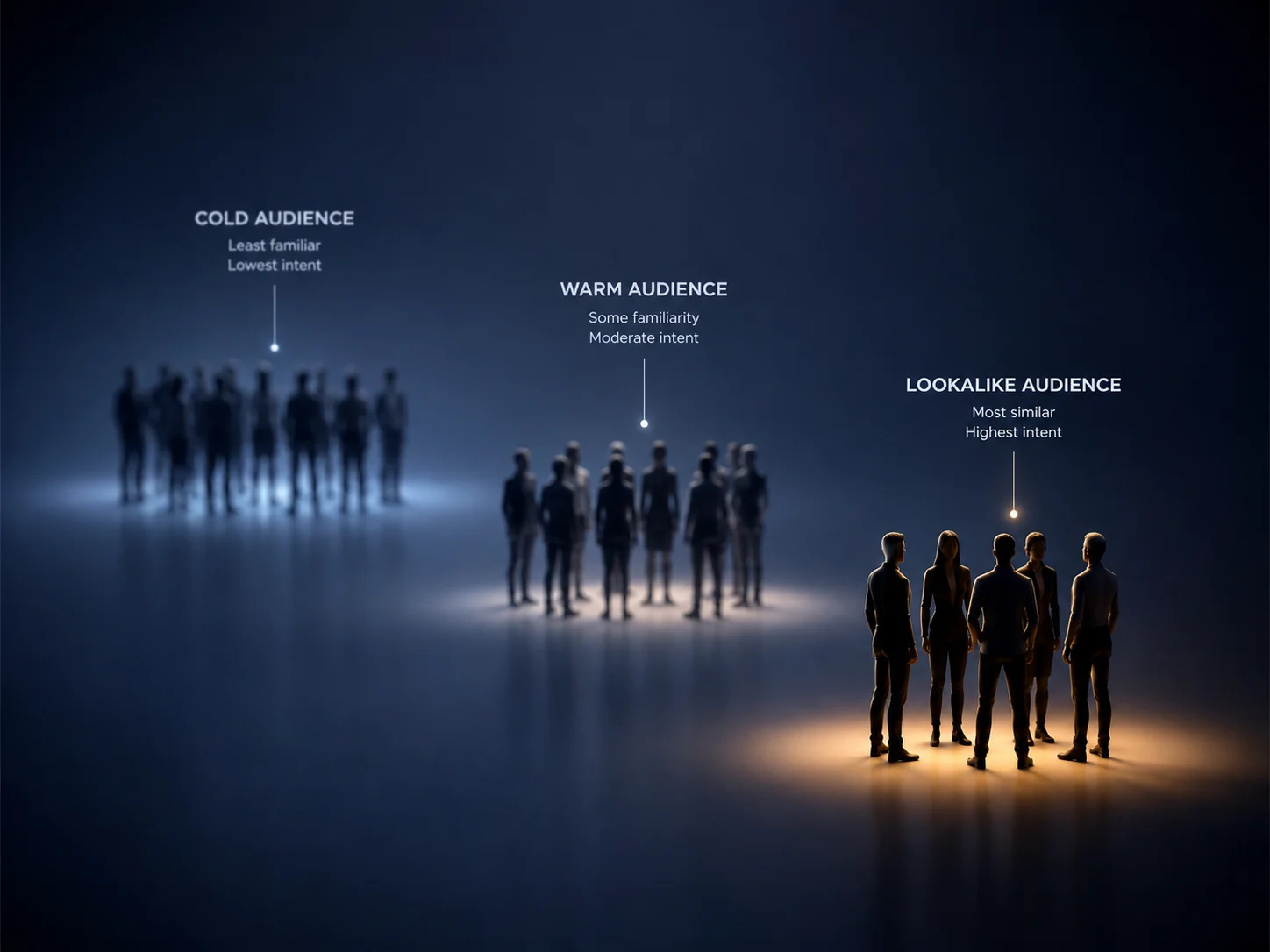
There are three core audience types available inside Meta Ads Manager, and each plays a different role in a Shopify store’s testing plan.
- Core (detailed) audiences. Built from age, gender, location, interests, and behaviors. Best for reaching completely cold shoppers who have never heard of your brand.
- Custom audiences. Built from people who already interacted with your store, including website visitors tracked by the Facebook Pixel, past purchasers, email subscribers, and people who engaged with your Instagram or Facebook page.
- Lookalike audiences. Built by asking Meta to find new people who resemble an existing custom audience, most commonly your purchaser list.
custom audiences Shopify setups work best when they are layered rather than used as one giant blanket segment. For example, combining “visited a product page” with “signed up for email” produces a high-intent warm segment, while combining “purchased once” with “more than 90 day ago” creates a useful win-back segment for retargeting campaigns. Building strong custom audiences Shopify segments like these is usually the difference between a retargeting campaign that quietly wastes budget and one that consistently recovers lost sales.
There is also Advantage+, Meta’s AI-driven audience and campaign automation, which increasingly blends prospecting and retargeting into a single campaign rather than asking you to choose an audience type manually.
Is Broad Targeting Better Than Interest Targeting in 2026?
For most Shopify stores, yes. Broad targeting now generally outperforms narrow interest targeting because Meta’s algorithm has more room to find high-value buyers when it is not restricted by manual interest filters.
Interest-based targeting weakened significantly after Apple’s iOS 14 privacy changes reduced the behavioral data Meta could collect. In response, Meta’s algorithm has become far more capable at finding buyers within a broad audience, provided it has strong conversion signals to work with (generally 50 or more purchases a week flowing through the account) and creative that stops the scroll. Broad targeting also avoids the audience overlap problems that show up when a store runs several narrow interest-based ad sets at the same time, all competing against each other in the same auction.
This does not mean interest targeting is dead. It still has a place for brand-new stores with zero purchase history, where Meta has no conversion data yet to optimize against. In that early stage, interest-based audiences give the algorithm somewhere to start.
How Do You Build a Facebook Audience Testing Plan for a Shopify Store?
A reliable testing plan starts small, uses identical creative across audiences, and gives every test enough budget to actually mean something. This is the core of good Shopify Facebook audience targeting: a repeatable process, not a one-off guess.
- Connect Shopify to Meta properly first. Set up the Facebook Pixel and the Conversions API together, not one or the other. This dual-tracking approach is what makes both your retargeting audiences and your lookalike seed lists accurate, especially with iOS privacy restrictions affecting browser-based tracking.
- Pick two or three audiences to test, not ten. A common mistake is testing five images, five headlines, and five audiences at once, which creates 125 different ad combinations and makes it impossible to know what actually worked. Start with something like broad targeting versus a 1 to 3% lookalike of past purchasers.
- Keep the creative identical across every audience in the test. If you vary the creative and the audience at the same time, you cannot attribute a win or loss to either one specifically.
- Fund each ad set properly before judging it. A workable rule of thumb is 2 to 3 times your target cost per purchase per ad set. If your CPA goal is $25, give each test audience $50 to $75 minimum before deciding whether it is working.
- Let each test run at least a full week. Facebook’s own learning phase needs time and a reasonable number of conversion events (generally 50 per week per ad set) to optimize properly. Judging results after a day or two almost always leads to the wrong conclusion.
- Scale the winner gradually. Once an audience proves itself, increase its budget by 15 to 20% every 3 to 5 days rather than doubling it overnight, which can reset the learning phase and hurt performance.
- Exclude past purchasers and recent converters where relevant. Stop paying to reconvert people you already have, and exclude recent converters from retargeting audiences to avoid wasted frequency.
For example, a Shopify fashion store in India running its first serious Meta ads campaign might start with $30 a day split between a broad audience and a 1% lookalike of its email list. After a week of consistent spend, the lookalike typically pulls ahead on cost per purchase, at which point the broad audience test can be paused and budget reallocated toward scaling the winner.
How Many Audiences Should You Test at Once?
Two to three audiences at a time is the practical limit for most Shopify stores, especially at the small daily budgets most new campaigns start with.
Testing more than that spreads your daily budget too thin for each ad set to reach a statistically meaningful result, and it often triggers audience overlap, where multiple ad sets compete against each other in the same Meta auction and inflate costs for both. Store owners with larger budgets (roughly $1,000 a day or more) can reasonably expand testing to a wider set of audience and creative combinations, but that scale is uncommon for new or mid-sized Shopify stores.
What Is a Good Lookalike Audience Percentage for Shopify Stores?
A 1 to 3% lookalike audience, built from your purchaser list, is typically the strongest starting point for Shopify stores in 2026.
A 1% lookalike is the most similar to your original seed audience and generally the highest quality, while expanding to 3, 5, or even 10% reaches more people but gradually loses precision. The general guidance is to start narrow (1%) and expand only after you have evidence the smaller lookalike is working, monitoring cost per purchase closely as you widen the pool. lookalike audiences Facebook built from a purchase-based seed list consistently outperform lookalikes built from page engagement or email signups alone, because purchase behavior is the strongest possible signal of intent. Getting lookalike audiences Facebook right is often the single biggest lever a Shopify store has for lowering cost per purchase once the basics are in place.
| Factor | Details |
|---|---|
| Agency Founded | 2009 |
| Years of Experience | 15+ |
| Specialisation | Shopify SEO and Shopify Meta Ads exclusively |
| Markets Served | India, USA, UK, Australia, Worldwide |
| Core Services | Shopify SEO services, shopify google ads management, shopify facebook ads agency, shopify email marketing agency |
| Contact | 9888923755 / info@rankmyshopify.com |
How Long Should You Test a Facebook Ad Audience Before Judging It?
At least one full week, and ideally until each ad set has recorded 50 or more purchase events, before deciding whether an audience is a winner or a loser.
Judging an audience after 24 or 48 hours almost always leads to the wrong call, because Meta’s algorithm needs time in the learning phase to find the right people within that audience. Cutting a test early because the first day looked weak is one of the most common reasons Shopify merchants conclude an audience “doesn’t work” when it was never given a fair chance.
What Mistakes Do Shopify Store Owners Make When Testing Audiences?
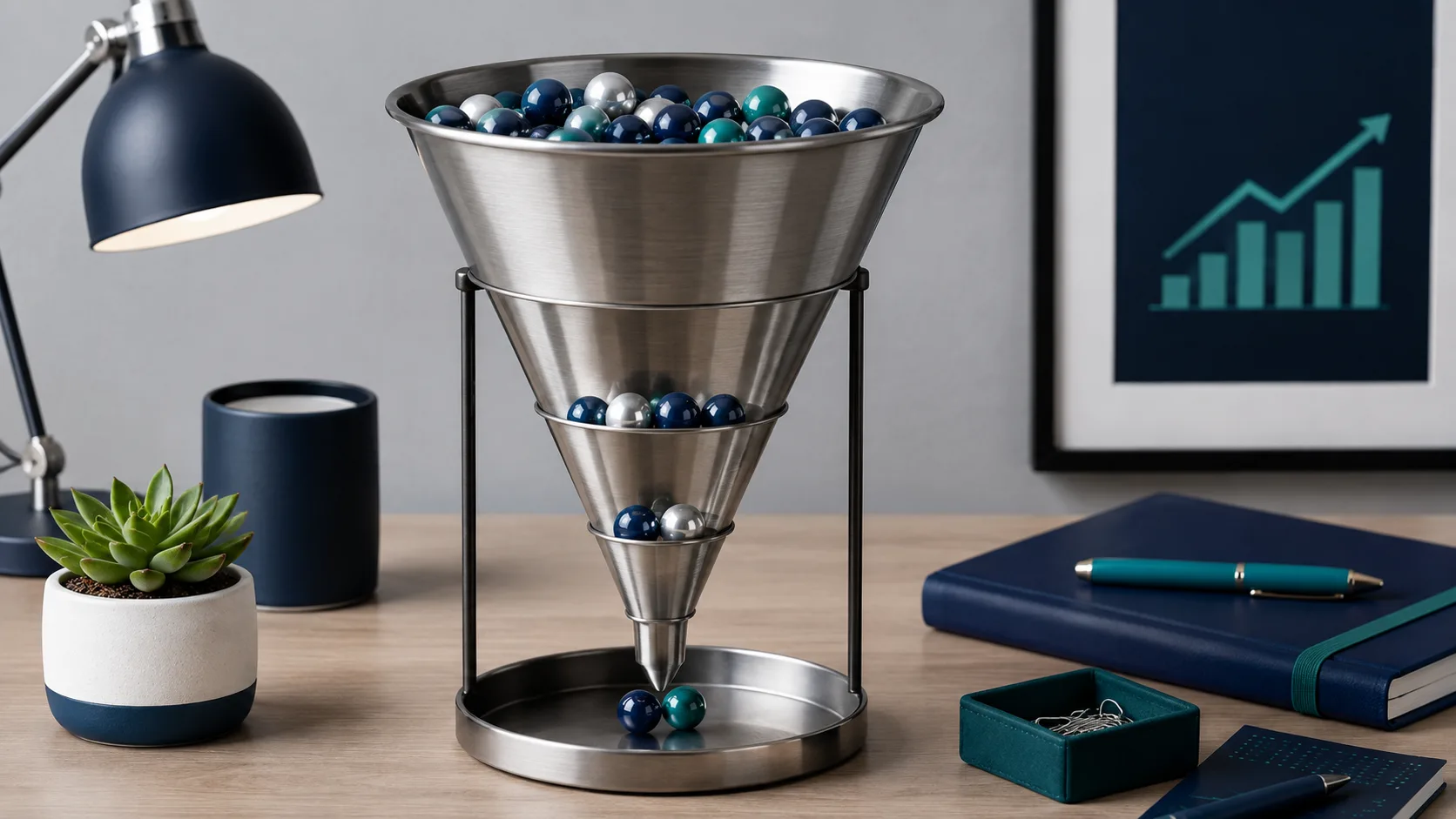
The most common mistake is running only bottom-of-funnel conversion campaigns while ignoring the top and middle of the funnel, which starves retargeting audiences and caps how far a store can scale. A full-funnel structure (cold prospecting, warm retargeting, and hot retargeting, typically weighted around 60 to 70% of budget toward top-of-funnel) consistently outperforms single-objective campaigns.
Other frequent mistakes include:
- Changing the creative and the audience in the same test, making results impossible to attribute
- Letting static customer lists go stale instead of re-uploading or syncing them at least monthly
- Building custom audiences from criteria Meta now restricts, such as anything resembling health conditions or financial status, which will simply be rejected
- Scaling a winning audience too aggressively, which resets the learning phase and temporarily tanks performance
Our team at RankMyShopify sees this last mistake constantly during shopify facebook ads agency engagements: a store finds a winning audience, doubles the budget overnight out of excitement, and then panics when performance dips for a few days before recovering.
Does Advantage+ Replace Manual Audience Testing?
Not entirely. Advantage+ automates audience selection and frequently beats manual setups once a Shopify store has steady conversion data (generally 50 or more monthly purchase events), and Meta reports 17% higher average ROAS for advertisers using it. Manual audience targeting still matters, though, particularly while an account is building that conversion history, or where you need tighter control over who sees the ads.
A sensible 2026 approach for most Shopify stores is to run manual broad and lookalike tests early, then allocate 30 to 40% of Meta budget toward testing Advantage+ Shopping Campaigns once the account has enough purchase data behind it, comparing results directly against the manual structure before shifting further budget.
Ready to scale your Shopify store?
Book a free 30-minute growth call with our Shopify specialists. We’ll audit your store and share an actionable roadmap — no obligations.