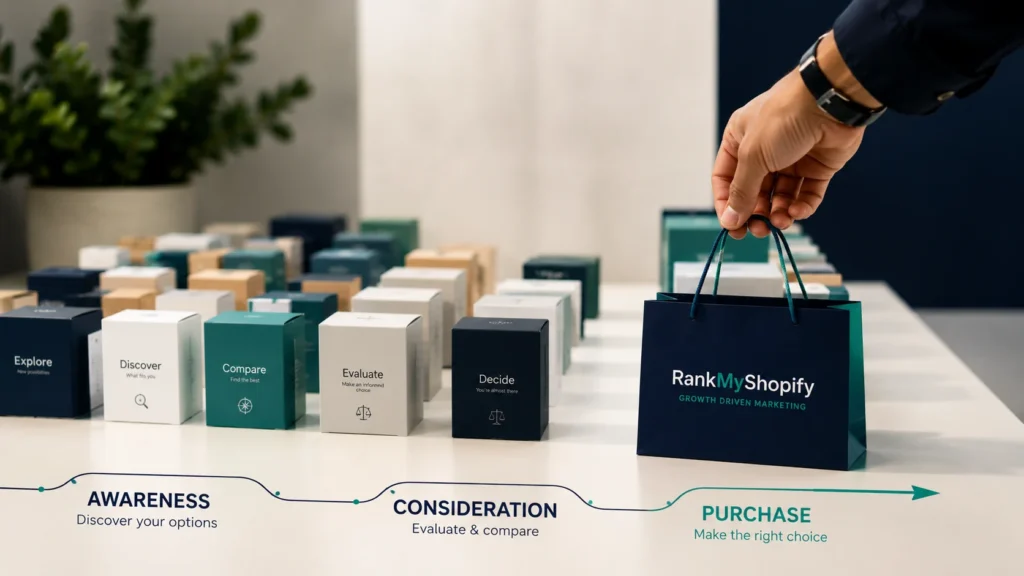
What Is a Shopify Paid Social Strategy?
A Shopify paid social strategy is a structured plan for using platforms like Meta, TikTok, and Pinterest to move shoppers through distinct stages of awareness, consideration, and conversion, rather than treating every ad as a direct sales pitch. Instead of running a single campaign type to everyone, a full funnel approach recognizes that most people who see an ad for the first time are not ready to buy yet.
For a Shopify store specifically, this strategy also has to account for how the platform connects to Meta’s ecosystem. This includes Shopify’s native Facebook and Instagram sales channel, product catalog syncing, and how order data flows back into ad platforms for optimization. A generic paid social plan built for a non Shopify business often misses these platform specific details entirely.
Why Full Funnel Beats Cold Conversion Campaigns Alone
Running only conversion focused campaigns to cold audiences almost always underperforms compared to a structured funnel. This approach worked years ago when competition was lower and CPMs were cheaper, but most advertisers now make the mistake of expecting immediate sales from people who have never heard of their brand. Cold audiences need at least some exposure to your brand before Meta’s algorithm has enough signal to find genuine buyers efficiently.
What Are TOFU, MOFU, and BOFU in a Shopify Marketing Funnel?
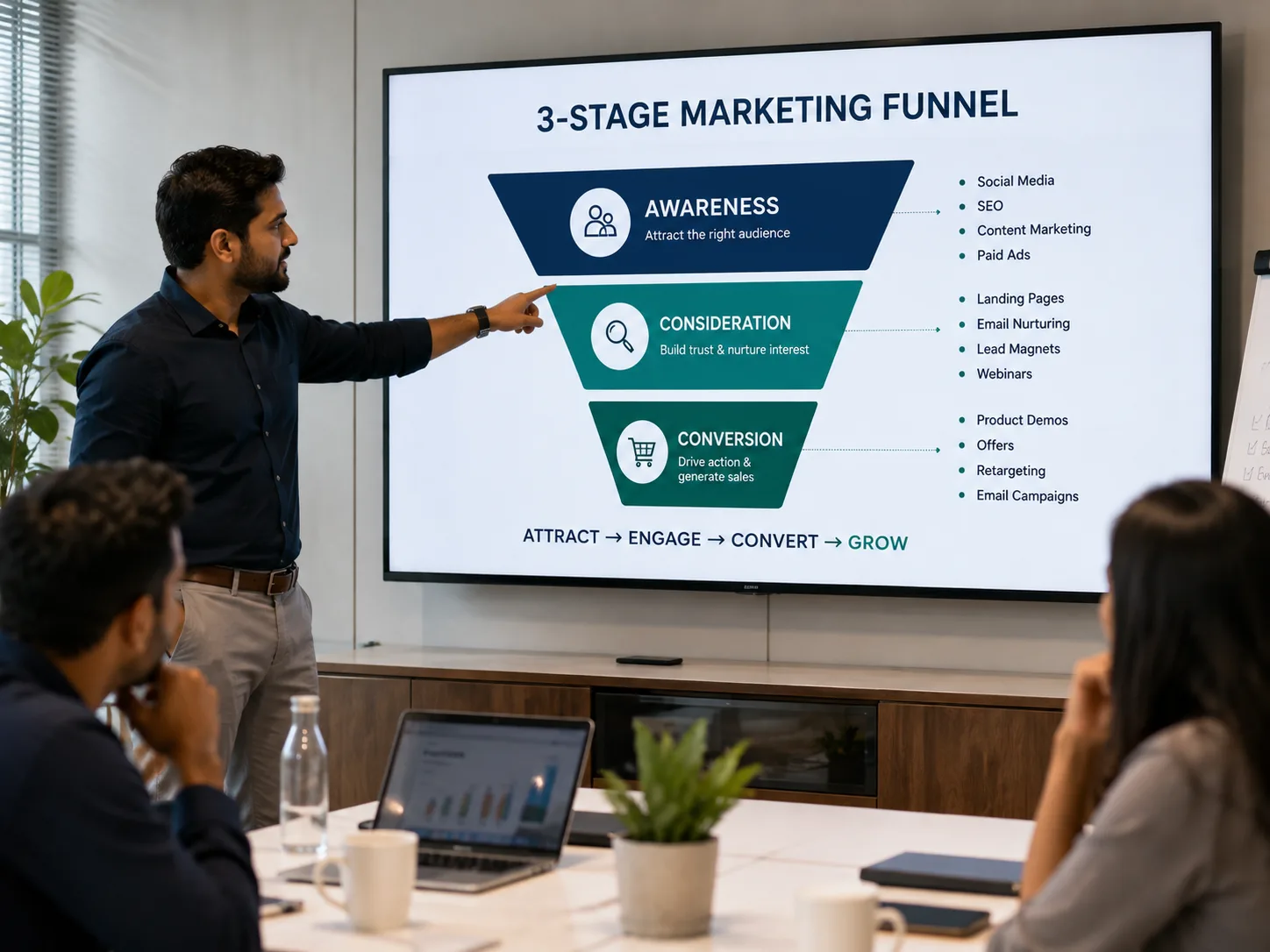
TOFU, MOFU, and BOFU represent the three core stages a shopper moves through before buying, and each stage needs a different campaign objective, creative approach, and audience. The Facebook ads funnel includes the top of the funnel or awareness stage, the middle of the funnel or consideration stage, the bottom of the funnel or conversion stage, and a retention or repurchase stage.
Top of Funnel (TOFU): Building Awareness
TOFU campaigns introduce your brand to people who fit your target audience but have never interacted with your store before. The goal at this stage is to introduce your brand to cold audiences, typically using brand awareness, video views, or reach objectives. Audience targeting at this stage usually relies on interest based targeting and lookalike audiences, such as a 1 percent lookalike built from your existing customer list.
Broad targeting at the TOFU stage allows Meta’s AI to find efficient audiences rather than restricting the algorithm with narrow parameters, and roughly 20 to 30 percent of your total Meta ad budget should go toward this stage.
Middle of Funnel (MOFU): Building Consideration
MOFU campaigns target people who have already engaged with your brand in some way, such as watching a video, visiting your site, or following your page, but have not yet made a purchase. These prospects know who you are but need more information or trust building before committing, and user generated content tends to perform particularly well at this stage.
Audience targeting here typically includes retargeting video viewers who watched 25 to 75 percent of a video, website visitors, or people who opened a lead form.This stage is about developing deeper relationships with the potential customers attracted during the awareness stage, using informative content like tutorials and explainer videos that answer questions before the shopper even asks them.
Bottom of Funnel (BOFU): Driving Conversion
BOFU campaigns target your warmest audience, the shoppers who are closest to buying. Ads at this stage are targeted to a hot audience, meaning customers who are already familiar with the brand and interested in what it offers.This typically means retargeting cart abandoners, pricing page visitors, or email subscribers using conversion, catalog sales, or sales objectives.
For Shopify stores specifically, dynamic product catalog ads work especially well at this stage, since they can automatically show shoppers the exact products they viewed or added to cart, pulled directly from your Shopify product feed.
How Should You Split Your Budget Across the Funnel?
A typical Shopify paid social budget split allocates the largest share to top of funnel prospecting, with smaller, more precise allocations to consideration and conversion. Roughly 20 to 30 percent of your total Meta ads budget should go toward TOFU campaigns.Some frameworks recommend allocating around 50 percent of total budget to TOFU specifically because a broad audience requires more spend to reach efficiently, ensuring you continuously fill the top of the funnel while maximizing return at the bottom.
The exact split depends on your store’s size, average order value, and how much existing traffic and customer data you already have to retarget. A brand new store with no pixel data will need to lean more heavily into TOFU initially, while an established store with a large existing customer base can shift more budget toward MOFU and BOFU retargeting.
| Funnel Stage | Typical Budget Share | Common Campaign Objective | Typical Audience |
|---|---|---|---|
| TOFU (Awareness) | 20 to 50 percent | Brand awareness, video views, reach | Interest targeting, 1 percent lookalikes |
| MOFU (Consideration) | 20 to 30 percent | Traffic, engagement, lead generation | Video viewers, website visitors |
| BOFU (Conversion) | 20 to 40 percent | Conversions, catalog sales | Cart abandoners, pixel retargeting |
What Results Can Shopify Stores Realistically Expect?
Realistic performance benchmarks depend heavily on funnel structure, niche, and creative quality, but recent data gives a useful baseline for planning. Facebook and Instagram ads average a ROAS between 2.5 to 1 and 3 to 1 for ecommerce broadly, while visual product categories like fashion and home decor on Instagram alone can achieve a ROAS closer to 8.83 to 1.Merchants who adapt full funnel best practices, including strong creative and proper Conversions API setup, consistently achieve blended ROAS of 2.5 to 4x across their Meta accounts.
Shopify specific data for 2026 shows an average ROAS of 2.8x for Facebook and Instagram ads, 2.2x for TikTok ads, and 3.5x for Pinterest ads, with top performing stores achieving 5 to 8x ROAS through advanced targeting and creative optimization. These numbers vary widely by industry, so they should be treated as a planning benchmark rather than a guarantee.
On the budget side, ecommerce ad spend typically runs between 7 and 35 percent of revenue in 2026, with store size being the main factor deciding where a brand lands. Stores under 1 million dollars in annual revenue typically put 25 to 35 percent of revenue into ads, while brands past 50 million dollars settle closer to 7 to 15 percent.
How Do You Set Up Tracking Correctly for a Shopify Paid Social Funnel?
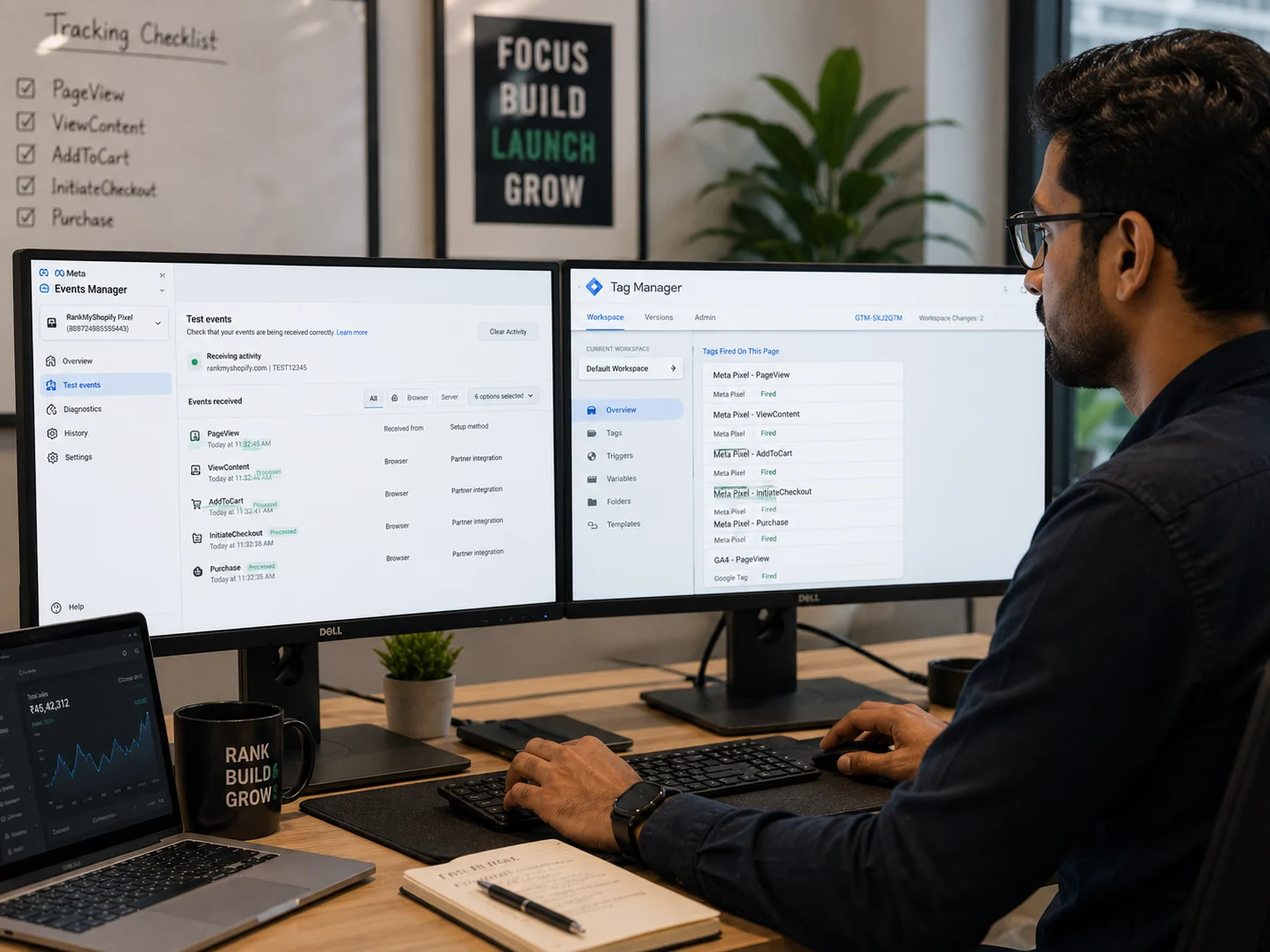
Accurate tracking is the foundation every funnel strategy depends on, since Meta’s algorithm optimizes campaigns based on the conversion data it receives. If that data is incomplete, every stage of the funnel suffers, not just the bottom.
The setup process generally includes the following steps.
- Install the Meta Pixel through Shopify’s native Facebook and Instagram sales channel, or through Google Tag Manager for more customization
- Set up the Meta Conversions API alongside the pixel, since server side tracking recovers data lost due to ad blockers and iOS privacy restrictions
- Configure deduplication between pixel and server side events so purchases are not counted twice
- Connect your Shopify product catalog to Meta Commerce Manager so dynamic ads can pull accurate product data automatically
- Verify that key events, including add to cart, initiate checkout, and purchase, are firing correctly across every stage of the customer journey
Real store owners run into this exact problem often. On the Shopify Community forums, multiple merchants have reported that sales from Meta ad campaigns stopped appearing on their Shopify dashboard after a notification stating that Facebook channels had been updated to a new version managed by Meta, disconnecting existing campaigns from Shopify’s reporting. This kind of disconnection can make a well built funnel look like it is underperforming when the real issue is broken reporting rather than a bad campaign.
Catalog sync problems are another recurring issue. A common cause of Facebook Shop and catalog connection failures is an incomplete or unapproved Facebook Commerce Account, mismatched Business Manager accounts across the Facebook Page, Instagram, and product catalog, or pre-existing catalog conflicts inside Meta’s Business Manager. Since BOFU retargeting relies heavily on dynamic catalog ads, a broken catalog connection can quietly undermine the most important stage of the funnel.
What Creative Approach Works Best at Each Funnel Stage?
Creative needs to shift as a shopper moves through the funnel, since the same ad rarely performs well at every stage. Facebook ads should mirror your sales funnel, offering messaging for customers at all different stages from discovery to purchase, which means creating multiple touchpoints to build brand awareness and drive engagement before pushing for a sale.A common approach starts with an image based ad that introduces the brand without a hard sell, followed by a video ad that tells more of the brand’s story to users who viewed that first ad.
For example, if you run a Shopify home decor store, a TOFU ad might be a short lifestyle video showing products in a real home setting with no discount or offer mentioned. A MOFU ad to people who watched that video might highlight customer reviews or a behind the scenes look at how the product is made. A BOFU ad to people who added a product to cart but did not check out might show that exact product with a limited time shipping offer or a clear trust signal like a return policy.
Why Should You Work With a Shopify Focused Paid Social Agency?
Running a full funnel paid social strategy well requires ongoing attention to campaign structure, creative testing, and technical tracking, all of which take real time to manage properly. RankMyShopify has worked exclusively with Shopify store owners since 2009, which means every paid social strategy we build accounts for how Shopify’s catalog sync, native sales channels, and reporting actually behave, not just how Meta Ads Manager works in isolation.
Our team handles the full setup process, from Meta Pixel and Conversions API configuration through catalog connection and funnel structure, so store owners across India, the USA, the UK, Australia, and Canada can focus on running their business while we manage the technical and strategic side of paid social.
Ready to scale your Shopify store?
Book a free 30-minute growth call with our Shopify specialists. We’ll audit your store and share an actionable roadmap — no obligations.