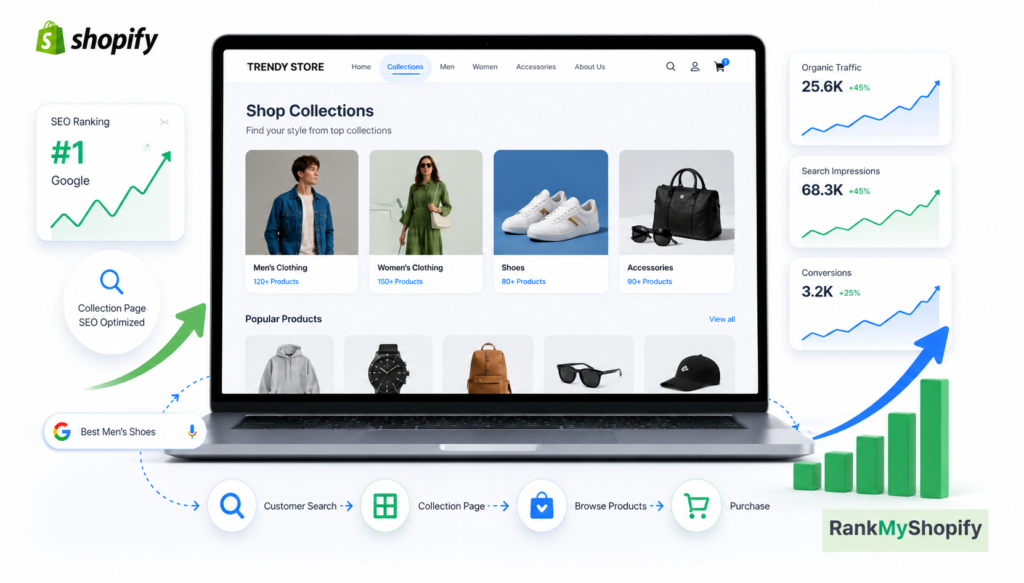
Have You Ever Ignored Your Store Collections?
Imagine walking into a huge shopping mall where every product is placed randomly. Finding the right item would feel confusing, right? The same thing happens on an online store when customers only see individual products without proper categories.
Many Shopify store owners spend most of their time improving product pages, adding better images, and writing descriptions. These things are important, but collection pages also play a major role in helping customers discover products faster.
A well-planned collection page creates a smooth shopping experience and helps search engines understand your store structure. This is where collection page seo becomes important because optimised collections can attract visitors who are searching for product categories instead of one specific item.
For Shopify stores, building strong collections can improve visibility, increase user engagement, and guide customers toward making purchases.
What Are Shopify Collection Pages?
A Shopify collection page is a category page that groups similar products together. For example, a clothing store may have collections like the following:
- Men’s Jackets
- Women’s Shoes
- Summer Dresses
- Fitness Accessories
Instead of making customers search through hundreds of products, collection pages help them quickly find what they need.
These pages work like a roadmap for your online store. They connect customers with multiple products while helping search engines understand which products belong together.
Why Collection Pages Can Be More Valuable Than Product Pages
Product pages focus on one item, but collection pages target broader searches. Many customers start their shopping journey by searching for categories rather than exact products.
For example:
Product Search:
“Black leather jacket, size medium”
Collection Search:
“Best leather jackets for men”
The second search shows that the customer is exploring options. A strong collection page can capture these visitors and introduce them to multiple products.
Collection Pages vs Product Pages: Key Differences
| Feature | Collection Pages | Product Pages |
| Main Purpose | Group similar products | Sell one specific product |
| Target Audience | Customers exploring options | Customers ready to buy |
| Keyword Opportunities | More category-based keywords | Specific product keywords |
| Internal Linking | Connects multiple products | Links mainly to related items |
| Customer Journey Stage | Discovery stage | Buying stage |
Both pages are important, but collection pages often create the first connection between customers and your store.
How Optimized Collection Pages Help
Shopify Stores
1. They Improve Website Navigation
A customer should never feel lost while shopping. Collection pages organise products into clear categories, making it easier to browse.
A simple structure helps visitors:
- Find products quickly
- Explore more options
- Spend more time on your website
- Move naturally toward checkout
2. They Target More Search Opportunities
Customers use different search terms when looking for products. Some search for brands, while others search for categories.
For example:
- “best running shoes”
- “comfortable office chairs”
- “summer clothing collection”
These searches usually match collection pages better than individual product pages.
A strong strategy for collection page SEO includes optimising collection titles, descriptions, URLs, images, and internal links.
3. They Increase Internal Linking Strength
Collection pages connect different pr
oducts together. This creates a stronger website structure.
When search engines crawl your website, clear connections between pages help them understand:
- Which products belong together
- Which pages are important
- How your store content is organized
How Rank My Shopify Helps Build Better Shopify Strategies
Creating a successful Shopify store requires more than adding products. Every page needs a clear purpose, proper optimisation, and a customer-focused approach.
At Rank My Shopify, the focus is on improving Shopify websites with better SEO strategies, content planning, and optimisation techniques that help stores become easier to find online.
A well-optimised collection page can become a powerful traffic source when it is created with the right keywords, useful content, and customer intent in mind.
Common Mistakes Shopify Owners Make With Collection Pages
Many stores create collection pages but do not optimise them properly.
Here are some common mistakes:
- Using only product grids without helpful descriptions
- Adding duplicate collection content
- Ignoring keyword research
- Creating too many unnecessary collections
- Forgetting internal links
- Not optimizing collection page titles and meta descriptions
A collection page should not only display products. It should guide customers and answer their search needs.
Tips to Create High-Performing Shopify Collection Pages
Follow these simple practices:
Write Helpful Collection Descriptions
Add unique descriptions that explain what customers can find in the collection.
Use Clear Collection Names
Avoid confusing names. Use terms customers actually search for.
Add Relevant Internal Links
Connect collections with related products and blog content.
Optimize Images
Use descriptive file names and proper alt text.
Understand Customer Intent
Create collections based on what shoppers are looking for.
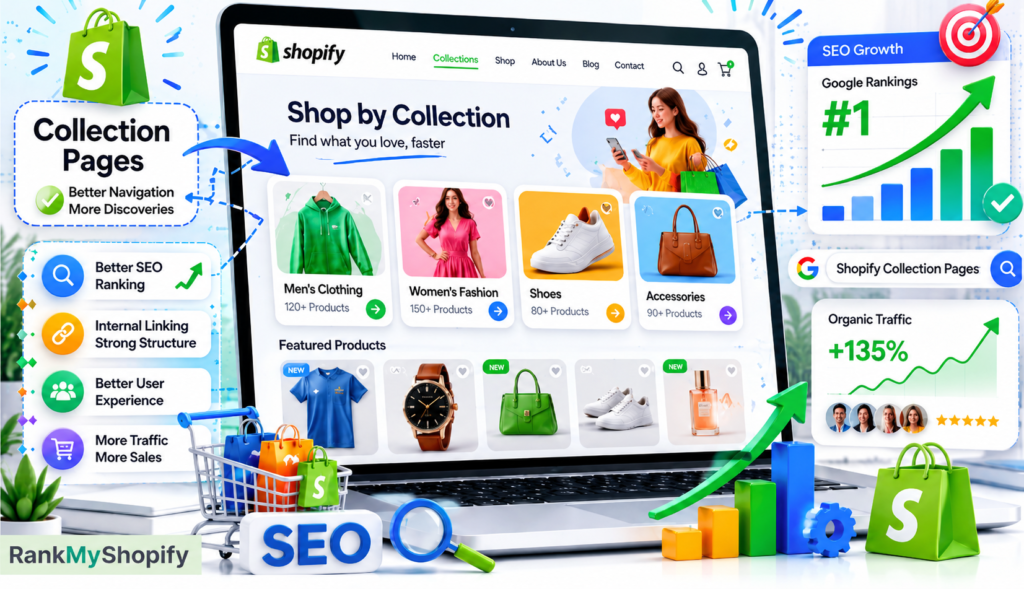
Why Product Pages Alone Are Not Enough
Product pages are designed to convert visitors into buyers, but they usually attract customers who already know what they want.
Collection pages help during the earlier stage when customers are comparing choices.
A visitor may not search for a specific product immediately. They may first look for a category, style, or solution. Your collection pages help you capture that opportunity.
A balanced Shopify strategy uses both:
- Collection pages to attract and guide visitors
- Product pages to complete the purchase journey
FAQs
1. Why are Shopify collection pages important for SEO?
Shopify collection pages are important for SEO because they help search engines understand your product categories and website structure. They target broader search terms, improve internal linking, and help attract customers who are searching for product groups instead of individual items.
2. Are collection pages better than product pages in Shopify?
Collection pages and product pages have different purposes. Collection pages help customers discover multiple products and target category-based searches, while product pages focus on converting customers who already know what they want to buy. Both are important for a successful Shopify store.
3. How can I optimise Shopify collection pages for better rankings?
You can optimise Shopify collection pages by using relevant keywords, writing unique collection descriptions, improving page titles and meta descriptions, adding internal links, optimising images, and creating collections based on customer search intent.
4. Do Shopify collection pages help increase online store sales?
Yes, optimised collection pages can increase sales by making it easier for customers to browse products. They guide visitors toward relevant products, improve user experience, and help shoppers discover more options before making a purchase.
5. How many products should a Shopify collection page have?
There is no fixed number of products required for a Shopify collection page. The ideal number depends on your store type and customer needs. A collection should include enough relevant products to provide choices without making browsing confusing.
Make Your Shopify Collections Work Harder
A Shopify store is not only about having great products. It is about helping customers find those products easily.
Collection pages create better navigation, support SEO growth, and improve the overall shopping experience. When optimised correctly, they can bring valuable traffic and help customers discover more products.
If you want to improve your Shopify store visibility and build a stronger SEO foundation, explore the expert strategies from Rank My Shopify and start creating collection pages that attract, engage, and convert visitors.
Ready to scale your Shopify store?
Book a free 30-minute growth call with our Shopify specialists. We’ll audit your store and share an actionable roadmap — no obligations.