Saudi Arabia is one of the most exciting online shopping markets in the Middle East, and more Shopify brands are trying to reach it every year. Many of them copy their US or UK plan and then wonder why Saudi shoppers cannot find them. The reason is simple. Saudi buyers search in both Arabic and English, shop heavily on mobile, expect local payment and delivery options, and follow a different calendar of buying seasons.
This guide explains how to improve your store’s rankings in this market step by step. If you want the basics of Shopify SEO in Saudi Arabia first, start there, then come back and use this checklist to put the details in place.
Why the Saudi Market Needs Its Own SEO Plan
Ranking well in Saudi Arabia is not just a matter of translating your English pages. Search behaviour is different in four important ways:
- Language: Shoppers switch between Arabic and English, sometimes in the same session.
- Intent: Arabic searches often use different words from a direct translation of the English term.
- Trust: Buyers look for clear delivery, returns and payment details before they order.
- Timing: Ramadan, Eid, Saudi National Day and White Friday shape demand far more than the usual Western holidays.
A store that treats these as a side project will always rank behind one that builds them into its structure from the start.
1. Start With Arabic and English Keyword Research
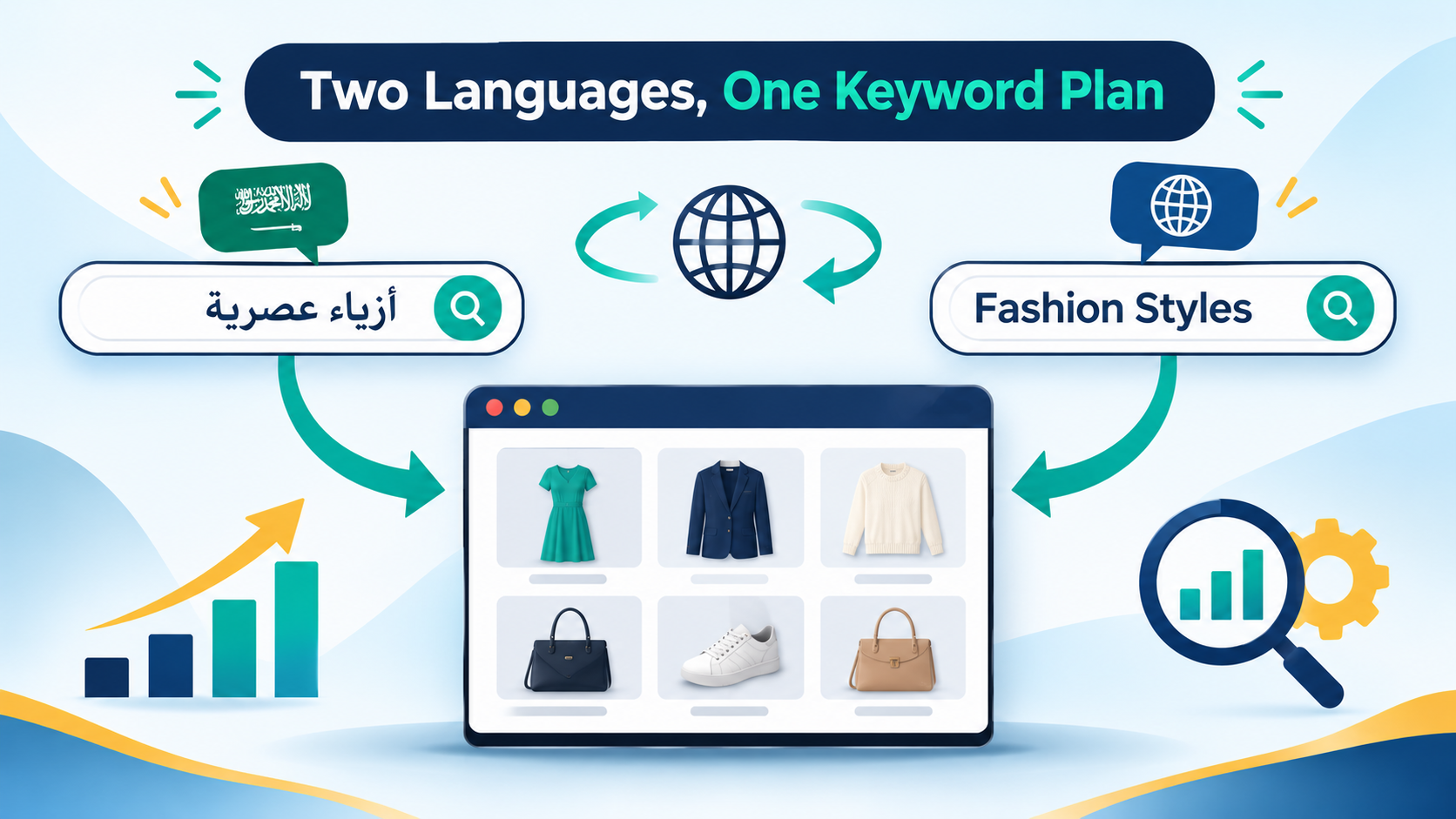
Good rankings start with the right keywords. For Saudi Arabia, build two keyword lists and compare them.
First, research your English terms using Google’s Saudi results (google.com.sa), not the US results. Second, research the Arabic terms real shoppers use. Do not run your English list through a translation tool. A phrase that is correct in formal Arabic may not be what people type into search. Check how competitors name their collections, look at Google’s autocomplete and “People also ask” boxes in Arabic, and ask your customer support team which words buyers use.
Then map each keyword to one page. Collections should target broad category terms, product pages should target specific items, and blog posts should answer questions. This keyword mapping is the foundation of any good Shopify SEO plan, and it stops your own pages from competing with each other.
2. Set Up Arabic and English Versions Correctly
This is where most Shopify stores lose ground in Saudi Arabia. If you offer both languages, the technical setup matters as much as the translation.
- Use Shopify Markets and language settings so each language has its own URL, such as /ar/ for Arabic, instead of a script that swaps text on the same page.
- Add hreflang tags (for example ar-SA and en-SA) so Google shows the right version to the right shopper.
- Support right-to-left layout. Check that your theme handles RTL properly, including menus, product galleries, filters and the checkout flow.
- Translate everything that search engines read: page titles, meta descriptions, image alt text, URLs where possible, and structured data.
- Set the currency to Saudi riyal (SAR) and show prices clearly, with VAT information where it applies.
If you plan to sell in more than one country, our Shopify international expansion service covers market setup, so every region gets the right pages and signals.
3. Optimise Collection and Product Pages for Saudi Shoppers
Collection and product pages are where Shopify stores win or lose organic revenue. For Saudi Arabia, check each of these:
- Titles and headings that include the main Arabic and English keyword naturally.
- Descriptions written for the local buyer. Mention sizing, materials, scent, fit or occasion in the way Saudi customers talk about them, rather than pasting a manufacturer’s text.
- Unique content on every page. Duplicate descriptions across variants or languages weaken your rankings.
- Product schema with price in SAR, availability and reviews, so Google can show rich results.
- Clean internal links from the homepage to collections and from collections to best sellers.
Fashion, abaya, modest wear, fragrance and beauty are popular categories in the Gulf, and each has its own search language. If you sell in these niches, our guides on fashion ecommerce SEO and SEO for beauty products explain how to structure collections and filters so shoppers and search engines understand them.
4. Show Local Trust and Payment Signals
Google rewards pages that people stay on and buy from, and Saudi buyers decide quickly based on trust. Make these details easy to find on your homepage, product pages and footer:
- Local payment options such as mada, Apple Pay, and buy now pay later providers like Tabby and Tamara, where you support them. Cash on delivery also matters to many shoppers if you can offer it.
- Delivery times and shipping costs to Riyadh, Jeddah, Dammam and other cities.
- A clear returns and exchange policy, in Arabic as well as English.
- Contact options people actually use, especially WhatsApp.
- Business details such as your registration information, where relevant to your business.
These signals improve conversion, and conversion supports ranking over time because more visitors stay and buy. Our Shopify conversion optimisation work focuses on exactly these points on product, cart and checkout pages.
5. Make Your Store Fast on Mobile
Many Saudi shoppers browse and buy on their phones, often on mobile networks. A slow store loses visitors before they see a single product. Compress images, remove apps you no longer use, limit heavy sliders and videos on the homepage, and check Core Web Vitals in Google Search Console. Arabic fonts can be heavy, so choose one that loads quickly and use font display settings that avoid blank text.
If your theme feels slow even after these fixes, a deeper Shopify speed optimisation review of the theme and apps will usually find the cause.
6. Build Content Around Saudi Buying Moments

Content wins you the searches that happen before a purchase. Plan your calendar around local moments instead of a generic global one:
- Ramadan and Eid: gifting guides, modest wear edits, home and hospitality essentials.
- Saudi National Day: themed collections and offers.
- White Friday: the regional sale season that starts building weeks before the date.
- Back to school and summer travel: useful guides and buying lists.
Publish early, because pages need time to be crawled and ranked. Our Black Friday SEO checklist for Google and AI search shows how to prepare sale pages in advance, and the same timing logic works for White Friday in Saudi Arabia. If you need a steady publishing plan in both languages, our Shopify content marketing service builds topic clusters that rank and sell.
7. Get Ready for AI Search
Shoppers in Saudi Arabia are starting to ask AI assistants what to buy, just as they do in other markets. To be recommended, your store needs clear product data, accurate prices, helpful descriptions, reviews and consistent brand information across the web. Clear, factual content in both Arabic and English gives these systems more to work with.
Shopify itself is moving in this direction. Read our breakdown of how your store can now sell to AI shoppers to see which product data and settings matter most.
8. Earn Relevant Local and Regional Links
Links from trusted websites still help rankings. Focus on quality, not volume. Good options include Saudi and Gulf lifestyle blogs, local news and magazine features, supplier and brand partners, and industry directories. Avoid link farms and bulk packages, because they put your store at risk. A steady, relevant link building plan builds authority over time.
9. Track the Right Numbers
Set up Google Analytics 4 and Google Search Console, and segment your reports by country and language. Watch organic clicks from Saudi Arabia, rankings for your top Arabic and English keywords, and, most important, orders and revenue from organic search. Rankings alone do not pay the bills. Our analytics and reporting service connects search performance to real revenue.
Quick Checklist for Saudi Arabian Shopify SEO
- Separate Arabic and English keyword lists, mapped to pages
- Language URLs, hreflang tags and RTL support in place
- SAR pricing and local payment options visible
- Unique Arabic and English product and collection content
- Fast mobile experience and healthy Core Web Vitals
- A content calendar built around Ramadan, Eid, National Day and White Friday
- Structured data and clear product information for AI search
- Relevant local links and tracking tied to revenue
About RankMyShopify
RankMyShopify is a Shopify-only marketing agency. We work only on Shopify and Shopify Plus stores, and our team has been working in SEO since 2009. We grow stores through Shopify SEO, AI search visibility, Google and Meta ads, conversion optimisation, email and analytics, all planned around orders and revenue instead of vanity metrics.
We serve Shopify brands in seven countries, including Saudi Arabia, where we plan Arabic and English SEO around local search habits. Our plans start from $150 a month with no lock-in contracts. As one example from another market, we helped a UK Shopify store reach 5.32K Google clicks and 195K impressions in six months. You can learn more about our team or see our Saudi Arabia SEO services.
Final Thoughts
Improving Shopify store rankings in Saudi Arabia comes down to doing the basics in a way that fits the market: Arabic and English keyword research, a correct language setup, trusted local details, a fast mobile store and content that follows the Saudi calendar. Start with one area, measure the result, and build from there.
Want to see where your store stands? Get a free AI SEO audit from RankMyShopify and we will email you your top fixes.
Ready to scale your Shopify store?
Book a free 30-minute growth call with our Shopify specialists. We’ll audit your store and share an actionable roadmap — no obligations.