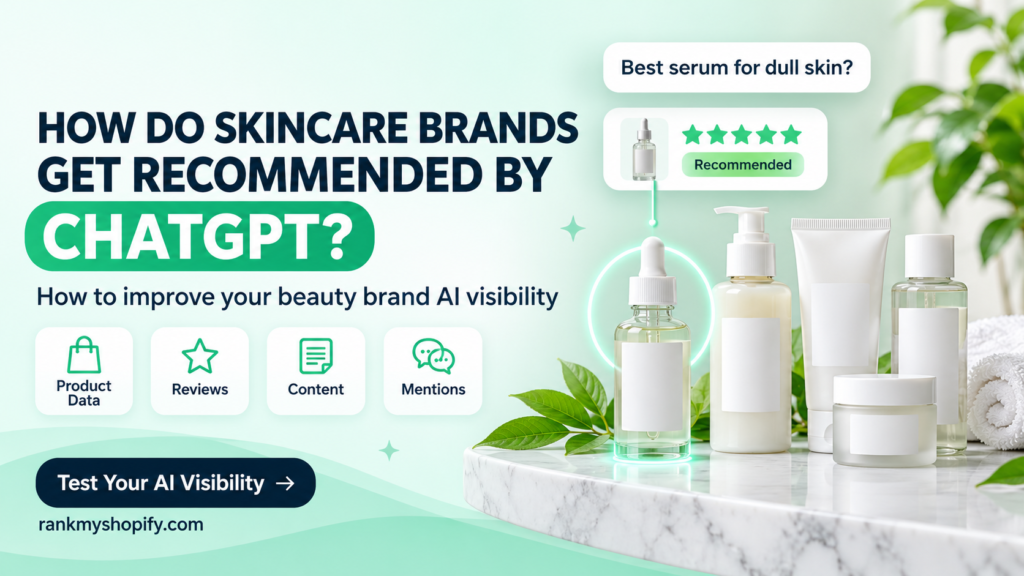
A shopper types “What is a gentle moisturiser for dry, sensitive skin?” into ChatGPT and gets three or four brand names in seconds. If yours is not one of them, that shopper may never see your store. That is why many founders now ask how do skincare brands get recommended by ChatGPT, and what they can do about it. This guide explains how AI assistants choose skincare brands and the steps that improve your chances in ChatGPT and Google’s AI answers.
Why Is Being Recommended by AI Different From Ranking on Google?
Because an AI assistant gives a short list of brands instead of ten blue links, and it explains why it chose them. There is no page two to fall back on. If your brand is not on that short list, the shopper never sees it.
This does not replace SEO. It builds on it. The same basics that help you rank, such as clear pages, fast sites and trusted links, also help AI systems find and understand your products. What changes is the emphasis: AI answers reward brands that are described consistently and mentioned positively in many places. Strong Shopify SEO is still the foundation, and AI visibility is the next layer on top.
How Do AI Assistants Decide Which Skincare Brands to Recommend?
They combine what they learned about brands during training, live web results and product data from feeds and catalogues. They also lean on what trusted third parties say about you.
For Shopify stores, the product data side is important. Shopify Catalog shares product information with participating channels, including ChatGPT, when the store and products qualify. Google AI Mode and Gemini receive products through the Google and YouTube sales channel or another Google Merchant Center feed. One March 2026 analysis found that most ChatGPT product carousel picks matched Google Shopping’s top 40 organic listings, so strong Google Shopping visibility helps in both places.
What Does Beauty Brand AI Visibility Mean?
Beauty brand AI visibility is how often, and how accurately, your brand and products appear when shoppers ask AI assistants for skincare advice. It has four parts:
- Mentions: the assistant names your brand
- Citations: it links to your pages as a source
- Accuracy: it describes your products, ingredients and prices correctly
- Context: it recommends you for the right skin types and concerns
You cannot improve what you do not measure, so start by testing real shopper questions. Our guide on how to check if ChatGPT mentions your store shows a simple way to do it.
How Do You Get Skincare Products in AI Answers?
Start with complete, consistent product data, because AI systems cannot recommend what they cannot read. Check that every product has:
- A clear title with product type, key ingredient and size
- A full description covering skin type, concerns, texture and how to use it
- The ingredient list, price, availability and shipping details
- Product identifiers such as GTIN, where you have them
- Clear photos and genuine customer reviews
In Shopify, confirm that your Google and YouTube channel and your agentic or ChatGPT sales channel are active, and check Merchant Center diagnostics for missing or rejected fields. Strong Shopify product page SEO covers the same details, so one set of improvements helps search, shopping feeds and AI answers together.
What Should Skincare Product Pages Say So AI Can Understand Them?
They should answer the questions a shopper would ask a skincare adviser, in plain language. Include:
- Who the product suits, such as dry, oily, combination or sensitive skin
- Which concerns it targets, such as dryness, dullness or breakouts
- What each key ingredient does, explained simply
- When to use it in a routine, and what to pair it with
- Patch test advice, allergens, size and shelf life
For example, instead of a vague title such as “Glow Serum 30ml”, a clearer title is “Vitamin C Brightening Serum for Dull Skin, 30 ml”, followed by a short note on who it suits and how to use it.
Add Product and Review structured data so machines can read your price, availability and ratings. Keep reviews as visible text, not only inside images or widgets that do not load. Avoid unproven medical claims, which we cover below.
Which Content Helps Skincare Brands Get Recommended?
Helpful guides that answer real questions give AI systems more to quote and more reasons to trust you. Good topics are ingredient guides, skin concern guides, morning and evening routines, product comparisons and myth-busting posts. If a dermatologist or qualified expert reviews your content, say so, but only when it is true.
Organise your store the way shoppers think. Collections by skin type and concern, such as “serums for dry skin”, match the questions people ask. Our guide to collection pages for SEO explains how to write them well, and a steady plan of Shopify content marketing keeps the guides coming.
Why Do Reviews and Mentions on Other Sites Matter So Much?
Because AI assistants trust what independent sources say about you more than what you say about yourself. A May 2026 Muck Rack analysis of more than 25 million AI-cited links found that earned media made up 84 percent of citations across ChatGPT, Claude and Gemini.
For skincare brands, that means working on:

- Beauty editors and reviewers: gift guides, roundups and honest product reviews
- Creators: real use and honest results on YouTube and social media
- Customer reviews: a steady flow of genuine reviews, on your site and on retailers that stock you
- Communities: helpful, honest answers in skincare forums, without hidden promotion
Ask for reviews soon after delivery, when the experience is fresh, and include skin type in the review form so future shoppers can find reviews from people like them. Never fake reviews or buy mentions. It breaks platform rules and can damage trust. Our approach to Shopify link building focuses on earned, relevant coverage.
How Do You Keep Skincare Claims Safe and Accurate?
Make only claims you can support, and keep them the same everywhere. Rules for skincare claims differ between countries, and words such as “cures”, “treats” or “heals” can turn a cosmetic into a regulated product in some markets. Use careful wording, keep test results on file and ask a regulatory adviser to review your claims.
Accuracy matters for AI as well. If your marketplace listings, website and social profiles describe a product differently, an assistant may repeat the wrong version. Review them together every quarter.
How Do You Make Your Brand Easy for AI to Recognise?
Describe your brand the same way everywhere. AI systems build a picture of who you are from many sources, and mixed signals make you harder to recommend. Check these basics:
- Use the same brand name, spelling and short description on your website, social profiles and marketplace listings
- Keep a clear About page that says who you are, where you are based and what your products are for
- Use consistent product names, sizes and ingredient lists across every channel
- Add Organization structured data to your site
- Keep a press or “as seen in” page, so your mentions are easy to find
When a brand has one clear identity, an assistant can match it to reviews and mentions with more confidence.
How Do You Check Whether Your Skincare Brand Appears in AI Answers?
Test a fixed list of shopper questions in ChatGPT, Gemini and Google AI answers, and record the results. Use four prompt types:
- Concern prompts: “Best serum for dull skin on a budget”
- Ingredient prompts: “Is niacinamide good for oily skin?”
- Comparison prompts: “[Your brand] vs [competitor] moisturiser”
- Brand prompts: “Is [your brand] good for sensitive skin?”
Use a fresh chat for each prompt, run each one three times and note whether your brand is mentioned, recommended and linked. Also confirm that your robots.txt file does not block OpenAI’s search crawler or Googlebot. Repeat the test monthly, because answers change.
Faster, clearer pages also help shoppers buy once they arrive, which is the focus of Shopify conversion rate optimization. Start with your top five products, fix their data and content, and then test again.
What Should a Skincare Brand Do in the First 30 Days?
If you are still asking how do skincare brands get recommended by ChatGPT, follow a simple order of work:
- Week 1: Test 10 to 12 shopper questions in ChatGPT and Gemini, and record your starting mention rate.
- Week 2: Fix the product data for your top five products, including titles, ingredients, identifiers and shipping details.
- Week 3: Improve those product pages with skin type, concern and routine information, and publish one ingredient or skin concern guide.
- Week 4: Ask recent customers for honest reviews, pitch two or three relevant beauty writers or creators, and test your prompts again.
Repeat the cycle monthly. Steady gains in skincare products in AI answers usually come from many of these steps working together, not from one trick.
About RankMyShopify
RankMyShopify is a Shopify marketing agency founded in 2009, with offices in Punjab, India and the USA. We help ecommerce brands in India, the USA, the UK, Australia and Canada with Shopify SEO, Google Ads, Meta Ads, CRO, content marketing and AI search optimisation. If you want to improve your beauty brand AI visibility, talk to our team.
Ready to scale your Shopify store?
Book a free 30-minute growth call with our Shopify specialists. We’ll audit your store and share an actionable roadmap — no obligations.