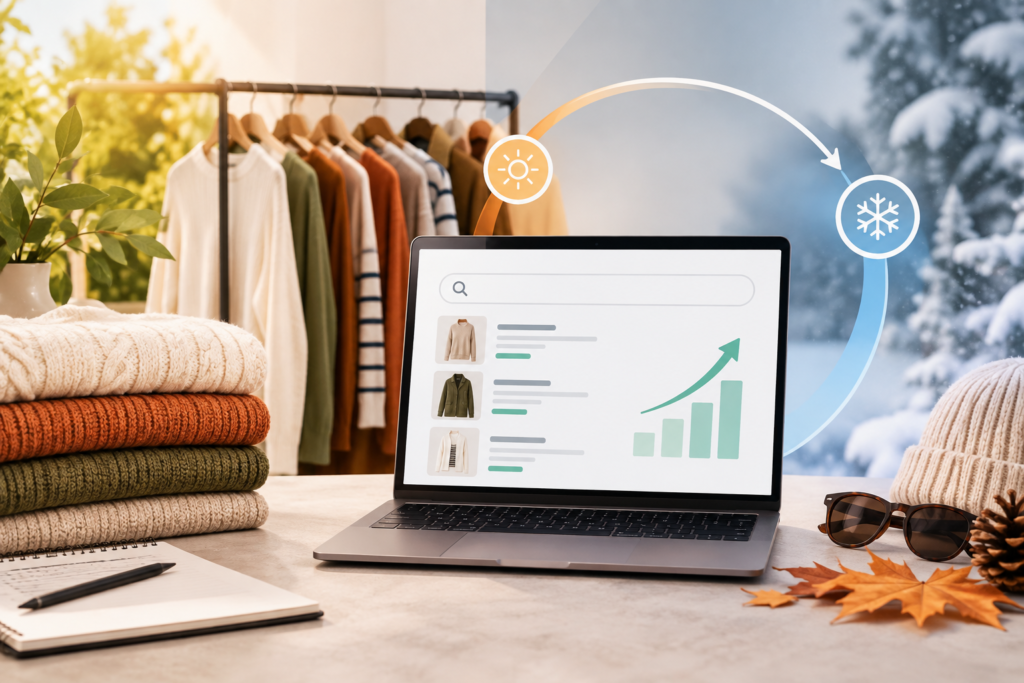
Every clothing brand has felt this pain: the moment a trend starts spiking on Instagram and TikTok, you rush to publish a collection page, throw some keywords into the title, and hit publish only to watch competitors who planned three months ahead outrank you before your page even gets crawled properly. That’s not bad luck. That’s a timing problem, and it’s the single biggest reason Shopify SEO for clothing brands fails during peak season.
Seasonal SEO isn’t about reacting to demand. It’s about anticipating it. Google needs weeks, sometimes months, to trust and rank a new or refreshed page which means the work that wins you Diwali sale traffic, monsoon collection searches, or “summer linen dresses” rankings has to start long before the season does.
This guide breaks down exactly how to build a seasonal SEO system for your Shopify store one that has you ranking when shoppers start searching, not scrambling once they’ve already bought from someone else.
Why Seasonal SEO Is Different for Clothing Brands
Fashion and apparel are among the most seasonally volatile categories in ecommerce. Search volume for terms like “winter jackets for women” or “festive wear India” doesn’t rise gradually it spikes hard, often within a two-to-four-week window, then collapses just as fast. If your page isn’t already ranking when that spike begins, you miss the entire window.
Compare that to something like home decor or supplements, where demand is relatively flat year-round. Clothing brands don’t get that luxury. A “Holi collection” page published in early March is functionally useless the searches already happened, the trend already peaked, and Google hasn’t even finished indexing your page.
Did you know? Google’s average time-to-rank for a brand-new commercial page in a competitive niche is typically 8–12 weeks, even with solid on-page SEO. For seasonal apparel keywords, that means content published “in season” is almost always too late.
This is the core principle behind seasonal SEO: you’re not writing for today’s shoppers. You’re writing for the shoppers who’ll search six, eight, twelve weeks from now.
The Google Indexing Lag Nobody Tells You About
Here’s the mechanic most clothing brands don’t account for. When you publish a new collection page say, “Autumn Knitwear 2026” Google doesn’t rank it instantly. It has to:
- Discover the URL (via sitemap, internal links, or crawl)
- Crawl the page and render its content
- Index it into Google’s database
- Evaluate relevance and authority against competing pages
- Rank it, which then continues to adjust as engagement signals (CTR, dwell time, bounce rate) accumulate
For a brand-new page with no backlink history, this entire cycle realistically takes 6–10 weeks before you see meaningful movement and that’s assuming your technical SEO is clean and the content is genuinely strong. Established pages that get refreshed each year rank faster because Google already trusts the URL, which is exactly why reusing and updating the same seasonal collection URL year over year (instead of creating a new one every season) is one of the most underrated Shopify SEO for clothing brands tactics.
Pro tip: Keep the same URL for recurring seasonal collections (e.g., /collections/winter-wear reused every year) rather than creating /collections/winter-wear-2026. This lets the page accumulate authority and historical ranking signals year over year instead of starting from zero every season.
Building a Seasonal Content Calendar
The single most effective tool for seasonal SEO is a content calendar built backward from your sales peaks. Here’s the framework we use with apparel clients:
- Identify your 4–6 seasonal peaks for most Indian and global clothing brands, this includes summer, monsoon, festive/Diwali, winter, wedding season, and end-of-season sale.
- Work backward 8–12 weeks from each peak. If your festive collection needs to be converting by the first week of October, your collection page, blog content, and internal links need to go live by early August at the latest.
- Stagger content types. Publish supporting blog content 10–12 weeks out, launch or refresh the collection page 8 weeks out, and begin link building and PR outreach 6–8 weeks out so authority signals compound before peak traffic hits.
- Refresh, don’t just create. For recurring seasons, update existing pages with new products, fresh copy, and updated internal links rather than building new URLs from scratch.
This is precisely the kind of topical, intent-driven planning our Shopify Content Marketing team builds into every content calendar content mapped to search intent and seasonal timing, not just a publishing schedule for its own sake.
Product & Collection Page SEO for Seasonal Drops
Your collection pages are where seasonal SEO either wins or fails. A few non-negotiables:
- Write unique collection descriptions. Don’t just list products include 150–300 words of genuinely useful copy targeting your primary and secondary keywords naturally (fabric type, occasion, style, fit).
- Avoid duplicate content from variants. Size and color variants on Shopify can generate near-identical URLs if not handled correctly, diluting your page’s authority. Canonical tags and clean variant structuring matter here.
- Optimize images before the season, not during. Large, unoptimized product images are one of the most common reasons Shopify apparel stores lose Core Web Vitals scores right when traffic peaks and load matters most.
- Internal link from evergreen pages. Link your seasonal collection from top-performing blog posts and your homepage well before the season starts, so Google can discover and crawl it early.
If your store’s page speed or Core Web Vitals typically dip during high-traffic seasonal spikes, that’s worth auditing now our Shopify Speed Optimization service exists specifically because seasonal traffic surges are when slow themes and bloated apps cost brands the most conversions.
Keyword Research for Seasonal Apparel Trends
Seasonal keyword research for clothing brands needs a different lens than evergreen SEO. A few practical approaches:
- Use Google Trends’ historical data, not just current search volume, to identify when a keyword actually starts climbing each year this tells you exactly when to start publishing.
- Target intent variations, not just the obvious head term. “Summer dresses” is competitive; “lightweight summer dresses for office wear” or “cotton summer dresses India” convert better and rank faster.
- Watch micro-trend keywords early. Fashion trends that spike on social media (a specific silhouette, fabric, or celebrity-driven style) often show search volume growth 3–4 weeks before they peak — that’s your window to publish.
- Map keywords to funnel stage. Top-of-funnel content (“how to style linen this summer”) should publish earliest; bottom-of-funnel collection and product pages should be fully optimized by the time that content starts ranking.
Technical SEO Prep Before Peak Season
Seasonal traffic spikes expose technical weaknesses that don’t matter during quieter months. Before every major season, clothing brands should audit:
- Site speed and server load capacity a slow-loading collection page during a festive sale doesn’t just hurt rankings, it kills conversions directly.
- Mobile usability apparel shopping skews heavily mobile, especially during flash sales and festive periods.
- Crawl budget and sitemap freshness make sure new or updated seasonal URLs are in your XML sitemap and submitted via Search Console well before launch.
- Structured data Product, Offer, and Review schema help your seasonal listings show rich snippets right when competition for visibility is fiercest.
A full pre-season technical review theme performance, app stack audit, Core Web Vitals is exactly the kind of work covered in a comprehensive Shopify SEO audit, and it’s worth doing at least 8 weeks before your biggest seasonal peak.
Link Building Ahead of Season
Backlinks take time to earn and even more time to pass authority. If you wait until your collection is live to start outreach, you’ll be earning links after the traffic window has already closed.
Instead:
- Start digital PR and HARO outreach 6–8 weeks before peak season, tied to trend or style stories journalists are already looking to cover.
- Pitch gift guides and seasonal roundups 8–10 weeks ahead most publications finalize these well before the season itself.
- Build links to evergreen category pages that feed into your seasonal collections, not just the seasonal page itself, so authority compounds across your site architecture.
This lead time is why white-hat Shopify Link Building has to run on a seasonal calendar, not a reactive one earned links from digital PR and outreach simply don’t materialize overnight.
Common Mistakes Clothing Brands Make
- Publishing seasonal pages in-season instead of pre-season. By the time the page ranks, the trend has moved on.
- Creating a brand-new URL every year instead of refreshing an existing one, resetting ranking history to zero.
- Ignoring page speed until traffic spikes expose it.
- Treating seasonal content as a one-off blog post instead of connecting it to collection pages through internal linking.
- Skipping structured data, missing out on rich snippets exactly when competition is highest.
Expert Insight: Working with 500+ Shopify brands, the pattern is consistent clothing stores that treat SEO as a 12-month calendar instead of a reactive checklist see traffic climb steadily year over year, while stores that scramble each season essentially restart their SEO progress from zero every single time.
A Sample 12-Month Seasonal SEO Calendar
| Season | Start Prep | Publish/Refresh Page | Peak Search Window |
|---|---|---|---|
| Summer Collection | March | April | May–June |
| Monsoon Wear | May | June | July–August |
| Festive/Diwali | July | August | September–October |
| Wedding Season | August | September | October–December |
| Winter Wear | September | October | November–January |
| End of Season Sale | December | January | January–February |
Find Out Answers Here
Most accounts need 60 to 90 days of consistent spend and optimization before smart bidding has enough conversion data to hit a stable target CPA or ROAS, though Shopping and Performance Max often show early signal faster than Search alone.
Reuse and refresh the same URL year over year. This preserves accumulated ranking signals instead of starting from zero each time.
Typically 6–10 weeks for a new page with no prior backlink history, assuming clean technical SEO and strong on-page content.
Publishing seasonal content in-season instead of pre-season by the time it ranks, the demand spike has already passed.
Use Google Trends’ historical year-over-year data to spot when a keyword typically starts climbing, and watch social platforms for early signs of micro-trends before they peak in search volume.
Ready to scale your Shopify store?
Book a free 30-minute growth call with our Shopify specialists. We’ll audit your store and share an actionable roadmap — no obligations.