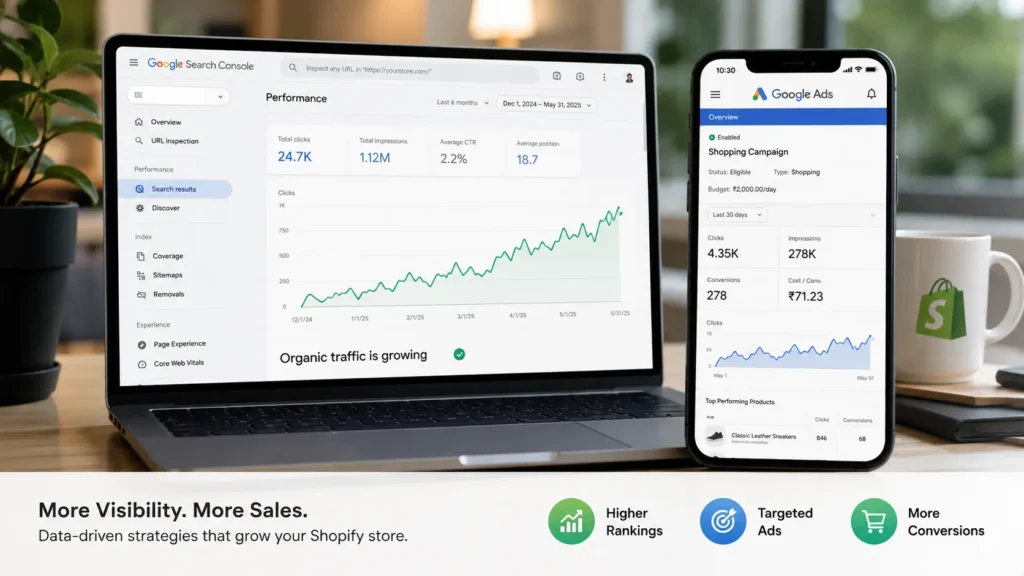
What Is the Real Difference Between Shopify Google Ads and SEO?
Google Ads buys placement at the top of search results for as long as you keep paying for clicks. Shopify SEO earns placement by making your store genuinely relevant, fast, and trustworthy to Google’s crawlers and to shoppers, and that placement keeps working after you stop actively investing in it. One is rented visibility. The other is owned visibility that compounds.
This distinction matters more for Shopify stores than for most other businesses, because Shopify’s platform gives you decent SEO foundations (editable meta fields, automatic sitemaps, canonical URLs, and 301 redirects) but does very little of the actual optimisation work for you. Keyword targeting, content depth, technical fixes, internal linking, and backlink building are all still on the merchant. Meanwhile, Google Ads and Shopify’s native Google Shopping integration let you go live with paid campaigns within a single afternoon.
Recent ecommerce ROI data makes the tradeoff clear. SEO returns an estimated 22:1 on investment over time, while Google Ads benchmarks closer to 2.5:1 to 3.5:1 depending on the campaign type. But that SEO number only tells the truth if your store survives long enough to see it, which is exactly why the “where should you invest first” question matters more than the “which is better” question.
How Fast Does Each Channel Actually Work?
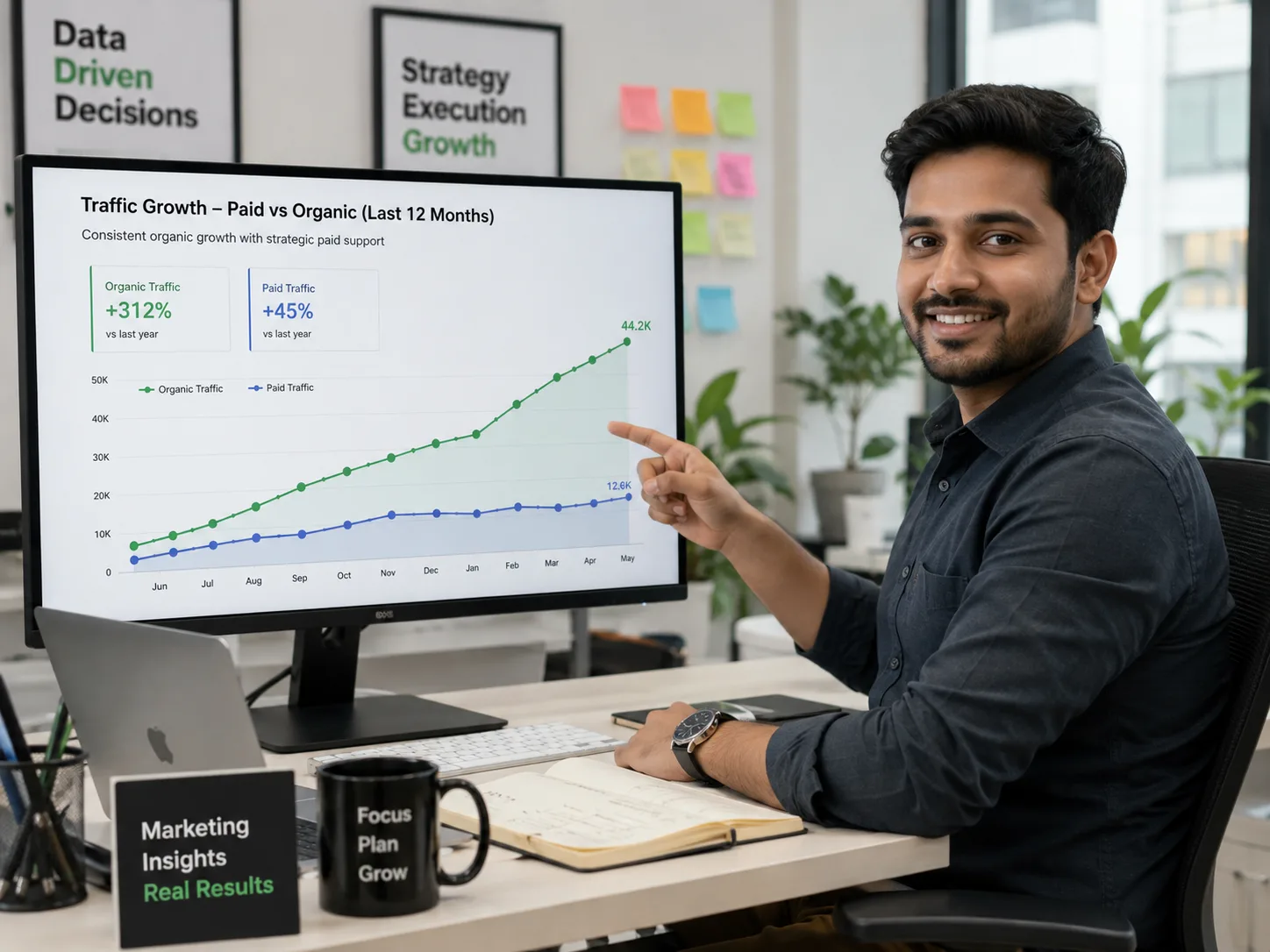
Google Ads works within hours. Shopify SEO works within months, and the exact timeline depends heavily on how competitive your niche is.
The moment your Shopify Google Ads management campaign goes live and your billing is approved, your products can appear in Google Shopping and search results. Most stores see their first click-driven sales within the first week, though whether those sales are profitable depends entirely on your cost per acquisition versus your margin.
Organic SEO follows a slower, more predictable curve. New Shopify stores typically see the first signs of movement between months four and six, with consistent, revenue-driving traffic arriving between months nine and twelve. A brand-new domain also faces an indexing delay of one to three months before Google fully evaluates and trusts the site. This is not a flaw in the process. It reflects how long it genuinely takes to build the content depth, technical health, and backlink authority that sustainable rankings require.
For example, if you launch a Shopify home decor store in India with 300 products and no prior SEO work, a Shopify SEO audit from RankMyShopify would typically uncover missing meta descriptions, thin collection page content, unoptimised image alt tags, and slow-loading product pages, all of which are fixable within the first 60 days. But turning those fixes into ranking positions on competitive terms like “handmade home decor India” still realistically takes six to nine months of consistent execution.
What Does Each Channel Cost for a Shopify Store?
Google Ads charges you for every click, with average Shopify store customer acquisition costs (CAC) sitting at $35 to $65 overall. Shopify SEO has upfront investment in strategy and content but a materially lower ongoing cost per customer once it starts working.
| Cost Factor | Google Ads | Shopify SEO |
|---|---|---|
| Typical CAC | $45 to $85 (paid social), higher for competitive Shopping terms | $12 to $25 (organic search) |
| Average CPC (Google Ads) | Around $5.26 across sectors | Not applicable |
| Time to first traffic | Hours to days | 4 to 12 months |
| Cost when you stop | Traffic stops immediately | Traffic continues |
| Long-term ROI benchmark | 2.5:1 to 3.5:1 | Roughly 22:1 |
The one variable that changes this entire table is your margin. If your average order value is $35 with a 40% gross margin, you have roughly $14 per order to spend on acquisition, which makes most paid social campaigns unprofitable from day one. Stores in this position are usually better served starting with SEO fundamentals, email capture, and organic social, then adding paid spend once conversion rate and average order value improve. Stores with strong lifetime value, for example a $400 LTV against an $80 paid CAC, can justify aggressive early ad spend because the long-term math already works.
Should a New Shopify Store Start With SEO or Google Ads First?
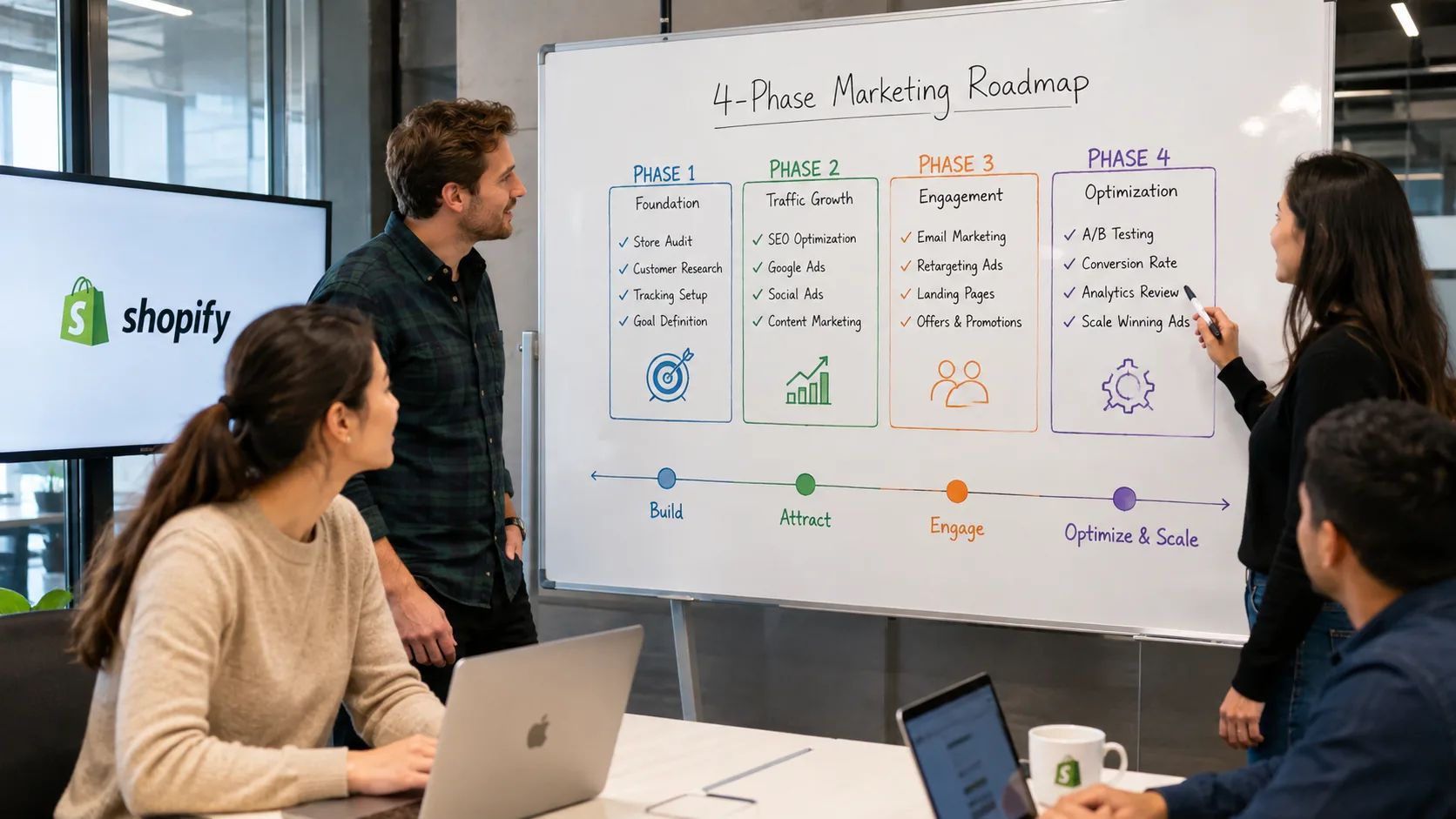
Start with Google Ads if you need sales within 90 days or want to validate product demand quickly. Start with SEO now, even at a small scale, if your store has runway to wait for compounding organic traffic and you want a lower long-term cost per customer.
These are not mutually exclusive choices, and treating them that way is the most common mistake we see at RankMyShopify. Here is how we recommend Shopify store owners sequence their investment by business stage.
- Pre-launch to first 90 days. Fix technical SEO foundations (site speed, mobile usability, structured data, indexable collection and product pages) so you are not starting from a deficit. Run a modest Google Ads or Shopify Facebook Ads budget to validate which products and audiences actually convert.
- Months 3 to 6. Begin consistent content production, two to four optimised blog posts or buying guides per month, targeting real search intent. Keep paid spend focused on your proven, highest-converting SKUs rather than broad testing.
- Months 6 to 12. As organic rankings for specific product or collection terms improve, start reducing paid spend on those exact keywords. You are now paying for clicks you could be getting for free, so redirect that budget toward new product launches or untested audiences.
- Beyond 12 months. SEO should be carrying a growing share of your traffic and revenue at a fraction of the cost per acquisition, while paid campaigns handle seasonal spikes, new launches, and competitive defense in search results.
A useful comparison here is buying versus renting a house. Paid ads give you immediate access to visibility, the way renting gives you immediate access to a place to live. SEO builds an asset you own outright over time, the way a mortgage payment eventually becomes equity. Most profitable Shopify stores end up doing both, but the sequencing and budget split shift as the business matures.
Can You Run Google Ads and SEO at the Same Time?
Yes, and for most established Shopify stores this is the strongest long-term strategy. Running both channels together also improves your data, since paid search keyword performance often reveals which organic terms are worth targeting next.
Combining channels works especially well when:
- You have seasonal or time-sensitive demand, such as gift categories that generate 60% or more of annual revenue in Q4, where you cannot afford to wait on organic growth alone.
- Your organic rankings are still building for competitive head terms, but you want visibility on those terms right now.
- You want to test new product categories with paid traffic before committing content and SEO resources to them.
- Your brand terms are being bid on by competitors, requiring defensive Google Ads spend even where you already rank organically.
A full-service approach, pairing Shopify SEO with paid channels through a shopify facebook ads agency or dedicated Google Ads team, and reinforcing both with a shopify email marketing agency to capture and retain the traffic you are already paying to acquire, tends to outperform any single-channel strategy over a 12-month window.
What Metrics Should You Actually Track?
Track channel-level CAC by cohort, not blended CAC, along with your Marketing Efficiency Ratio (total revenue divided by total ad spend) and your LTV to CAC ratio.
Many Shopify store owners judge performance using surface-level numbers like raw traffic or platform-reported ROAS, both of which can be misleading. Platform ROAS is subject to attribution model differences between Google Ads, Meta, and Shopify Analytics, so it rarely tells the full story on its own. Instead:
- Marketing Efficiency Ratio (MER): Total revenue divided by total ad spend. This is a more reliable north-star metric because it is harder to manipulate through attribution settings.
- Channel-level CAC: Break down cost per acquisition separately for paid search, paid social, organic search, and email. Blended CAC hides which channels are actually profitable.
- LTV to CAC ratio: A healthy ratio is generally 1:3 or better. If a channel’s CAC approaches or exceeds customer lifetime value, that channel is destroying value even if the top-line revenue looks fine.
- Organic keyword rankings and indexed pages: Monitored through Google Search Console, these show whether your SEO investment is actually translating into visibility.
Ready to scale your Shopify store?
Book a free 30-minute growth call with our Shopify specialists. We’ll audit your store and share an actionable roadmap — no obligations.