Shoppers now ask an assistant for a gift idea and get a short list of named products. Scrolling through pages of search results for “gold hoop earrings” is no longer the only way people buy. If your pieces are missing from the answers ChatGPT gives about jewellery, you can lose the sale before anyone visits your website. This guide explains how AI assistants choose jewellery to recommend and what a Shopify store can fix first.
Why is jewellery a strong fit for AI shopping?
Jewellery combines high value, detailed specifications and gift intent, which is exactly where shoppers want help comparing options. Anglera’s guide explains that shoppers now describe what they want in plain language, such as a platinum solitaire under a set budget, and expect a short, justified answer. Online jeweller James Allen saw this early and launched a ChatGPT plugin in 2023 to help shoppers pick an engagement ring.
The lesson is simple. The more clearly your product data answers a question, the easier it is for an assistant to name your piece.
How do AI assistants decide which jewellery to recommend?
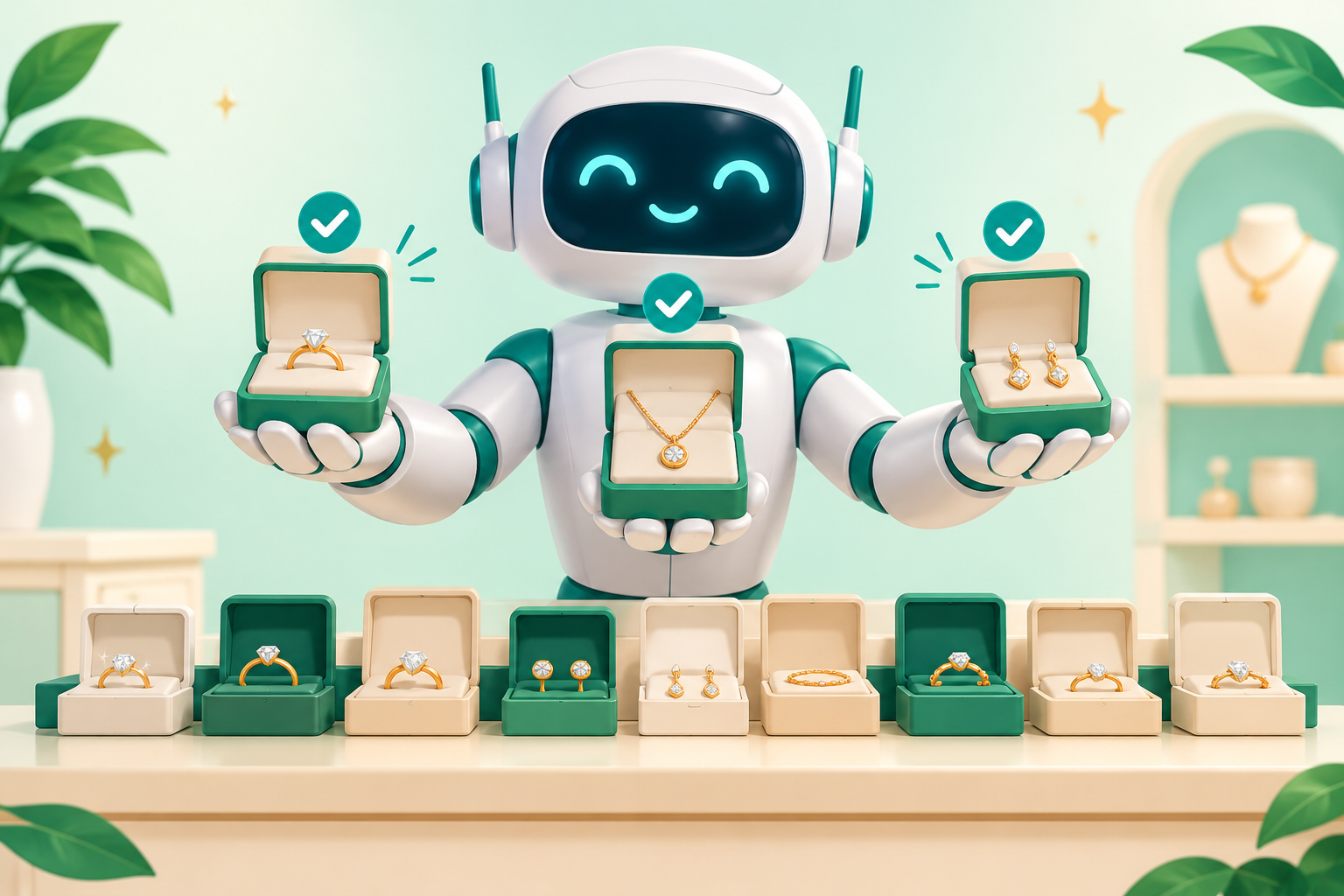
They rely mainly on structured product data, not on attractive page copy. Shopify says ranking factors differ by platform but can include data quality, relevance, availability, pricing and engagement signals.
The shift toward supplied data is large. Profound’s analysis of 1,757,723 ChatGPT shopping prompt runs in July 2026 found that feed-integrated product picks rose from 8.26% to 61.54% on July 10, and reached about 65% of tracked recommendations by September 3. In plain terms, most product picks now come from data that merchants and platforms provide, not from pages the assistant finds by searching the web.
Paying does not change the picture. OpenAI’s help documentation says product results are selected independently by ChatGPT and are not ads.
Does your Shopify jewellery store appear in ChatGPT automatically?
Your products may already be eligible, but eligible does not mean recommended. OpenAI’s help page says that for Shopify merchants, product data is already integrated into ChatGPT through Shopify Catalog, with no extra work required. Shopify also states that eligible products are listed in Catalog by default and that edits in your admin flow through to AI channels.
Two limits are worth knowing:
- Shopify’s ChatGPT route applies to merchants in Catalog who sell to US buyers, wherever the store is based.
- What decides whether a piece is shown or skipped is the quality and completeness of its data.
The direction of travel is clear. Shopify reported that AI-driven traffic to its stores grew 8 times year on year in Q1 2026, and orders from AI-powered searches rose nearly 13 times. These figures cover all Shopify categories, not jewellery alone, so use them as a trend and not as a forecast for your store.
One March 2026 study of 43,000 products also reported that 83% of ChatGPT product recommendations came from Google Shopping’s top 40 organic listings. It is a single study, but it suggests that a clean Google Merchant Center feed helps in both places. Our guide to optimising your Shopify product feed shows how.
Which product details do AI assistants need for jewellery?
They need specific, consistent attributes. Jewellery is spec-heavy and gift-driven, so shoppers ask by metal, stone, budget and occasion. Anglera’s jewellery guide notes that thin listings lean on brand language such as “timeless elegance” instead of the facts an assistant can match to a request.
Make sure each piece clearly states:
- Metal and purity: 14k or 18k gold, platinum, sterling silver or vermeil
- Gemstone type and origin: natural or lab-grown
- Carat weight: a specific number, not a range
- Cut, shape, clarity and colour grade: wherever they apply
- Setting and ring sizes: which sizes are in stock
- Measurements: chain length, pendant size and weight
- Proof of quality: hallmark, certificate or care details
- Price, stock and delivery time: accurate at all times
Two rules matter as much as the list. First, write each value the same way across every variant, because “18k yellow gold” typed three different ways reads as three different answers. Second, put values in product fields, not only in the description. A sentence that says a ring “comes in 14k or 18k” does little for a filter.
How should you rewrite jewellery product pages for AI?
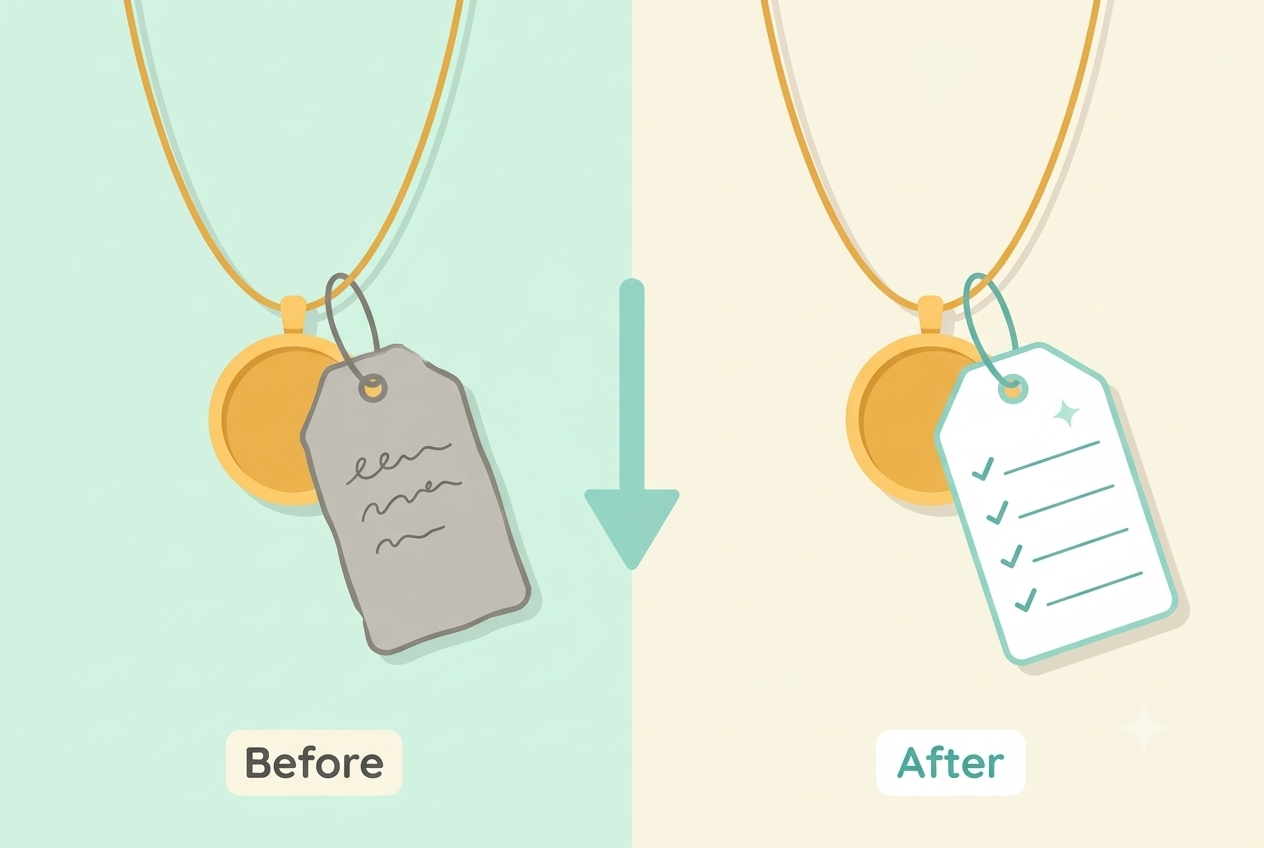
Lead with facts and keep the brand story for later. Here is an illustrative example.
Before: “Timeless elegance. A statement piece for every occasion.”
After: “18k yellow gold vermeil on sterling silver. 0.5 ct lab-grown diamond, round brilliant cut, 5 mm. Sizes 5 to 9 in stock. Hallmarked. 30-day returns.”
The second version answers the questions a shopper asks an assistant. Then follow these steps:
- Fill in the product category and attribute fields in Shopify admin, such as material and colour, instead of leaving them to the description.
- Use clear titles that include metal, stone and piece type.
- Add your top gift questions to each page, such as resizing, care and delivery.
- Check that your theme outputs complete product markup. Our guides to Shopify product page SEO and structured data cover this.
Shopify also warns that platforms without structured data fall back on scraping a page, which can surface outdated prices and stock. Accurate data protects you from that.
Do reviews, trust pages and outside mentions matter?
Yes, because jewellery is a high-trust purchase. ChatGPT’s shopping answers include summarised reviews, and Shopify lists engagement signals among possible ranking factors. Nobody outside the platforms knows the exact weighting, so treat the points below as trust basics, not tricks:
- Collect genuine reviews that mention the occasion, fit and quality
- Publish clear returns, resizing and warranty pages
- Show hallmark or certificate details on the product page
- Earn mentions in gift guides, reviews and trusted blogs
What mistakes keep jewellery stores out of AI answers?
Most problems come from missing or messy data, not from a lack of effort. Watch for these:
- Vague descriptions that skip metal, stone and size
- Carat weight written as a range or buried in the title
- Missing or made-up product identifiers. Anglera cites a Google Merchant Center guide noting that missing or invented GTINs can drop products out of comparison groups
- Different wording for the same value across variants
- Robots.txt rules that block AI assistants from reading product pages
- Outdated prices or stock, which Shopify says erodes buyer trust and costs sales
Fixing these also helps your regular Google SEO, because the same product data feeds both.
How do you check what ChatGPT says about your jewellery brand?
Test it the way a shopper would, and repeat the test every month. Rithum recommends running your customers’ top questions and recording which products appear.
- Write 10 prompts a gift buyer might ask, covering budget, metal, stone and occasion.
- Run them in ChatGPT and note which brands and products are named.
- Run Shopify’s free audit tool on your key product pages. It scans a product page URL for the structured data and robots.txt access AI assistants need.
- Check your analytics for referral visits from ChatGPT.
- Fix the gaps, then run the same prompts again.
Answers can differ from one session to the next, so look for trends over several runs and not one result.
What should you fix first before the gifting season?
Start with your 20 best-selling pieces, not the whole catalogue. The gifting season is close, and these are the pieces most likely to be asked about.
- Complete every attribute on those pages
- Clean your Google Merchant Center feed, including product identifiers
- Keep price and stock accurate
- Add or improve returns, resizing and hallmark information
- Re-run your ChatGPT test prompts after each round of fixes
For the wider strategy, read our AI search optimisation guide, our overview of what Shopify’s Fall ’26 Edition means for selling to AI shoppers, and our page on jewellery store SEO.
About RankMyShopify
RankMyShopify is a Shopify-exclusive SEO and digital marketing agency founded in 2009, with offices in Punjab, India and the USA. We work with ecommerce brands across India, the USA, the UK, Australia and Canada on Shopify SEO, Google Ads, Meta Ads, conversion rate optimisation, content marketing and AI search optimisation.
Ready to scale your Shopify store?
Book a free 30-minute growth call with our Shopify specialists. We’ll audit your store and share an actionable roadmap — no obligations.